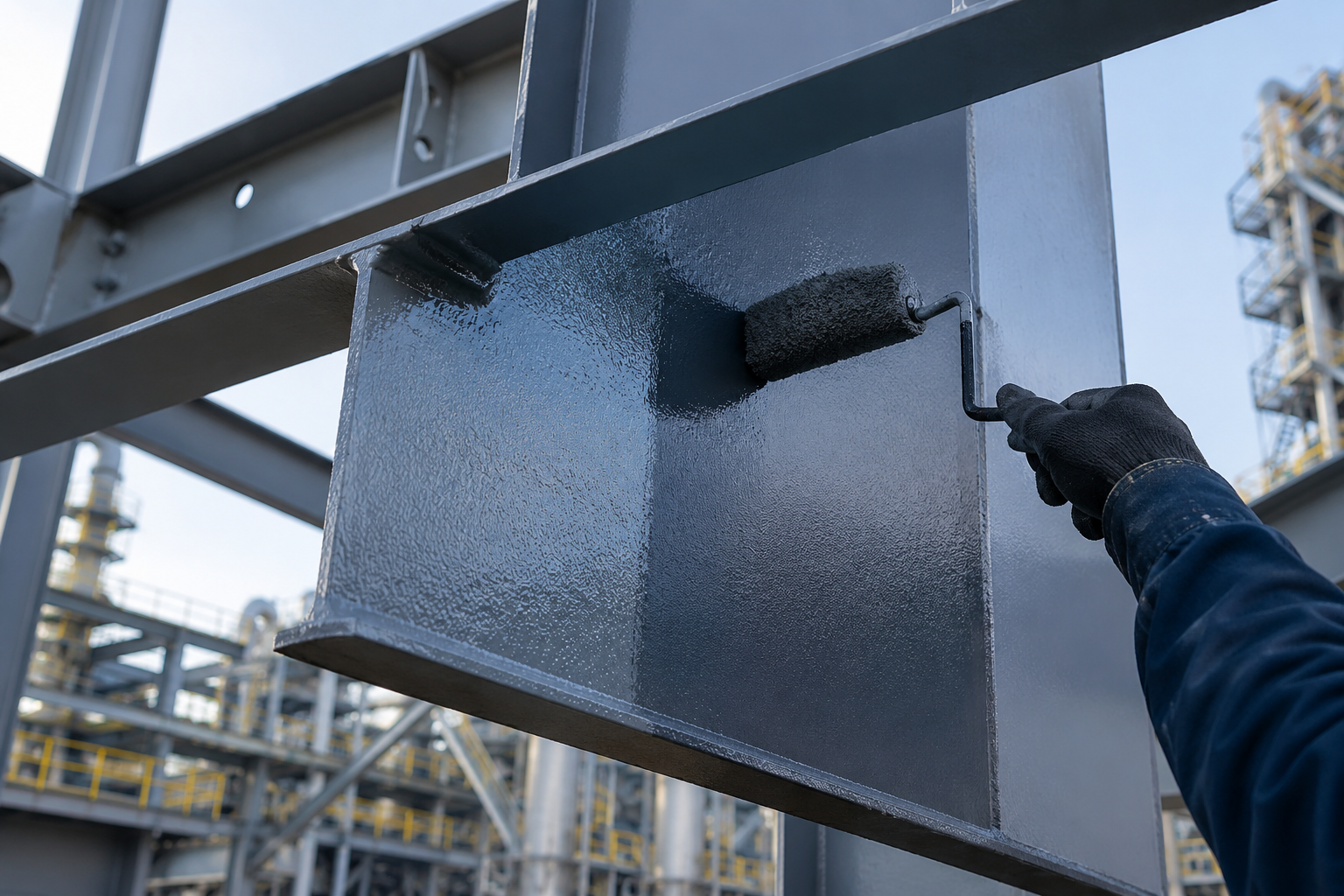
Industrial painting and coatings are not about making something look good. They are about stopping assets from failing and avoiding the cost of doing the same job twice.
Industrial painting for steel infrastructure requires more than applying protective coatings. Correct surface preparation, coating selection and quality control all contribute to extending asset life and reducing long-term maintenance costs across industrial facilities.
Most of the time, we are not called in at the start. We are called in after something has already gone wrong. Coatings have failed early. Rust is coming through. The site has to be shut down again to fix it.
That is where the real cost sits.
If you manage a warehouse, commercial building, or infrastructure asset, the job is not just getting it painted. The job is getting it done once, properly, and not having to come back to it in a few years. You can explore how this applies across broader commercial painting services.
What Industrial Painting and Coatings Actually Involve
Industrial painting and coatings are part of asset protection. Not maintenance for appearance but for protection.
On most sites, that includes:
- Structural steel exposed to weather or moisture
- Internal steel in warehouses with constant traffic
- Plant areas where chemicals or heat are involved
- Infrastructure assets that cannot be easily accessed again
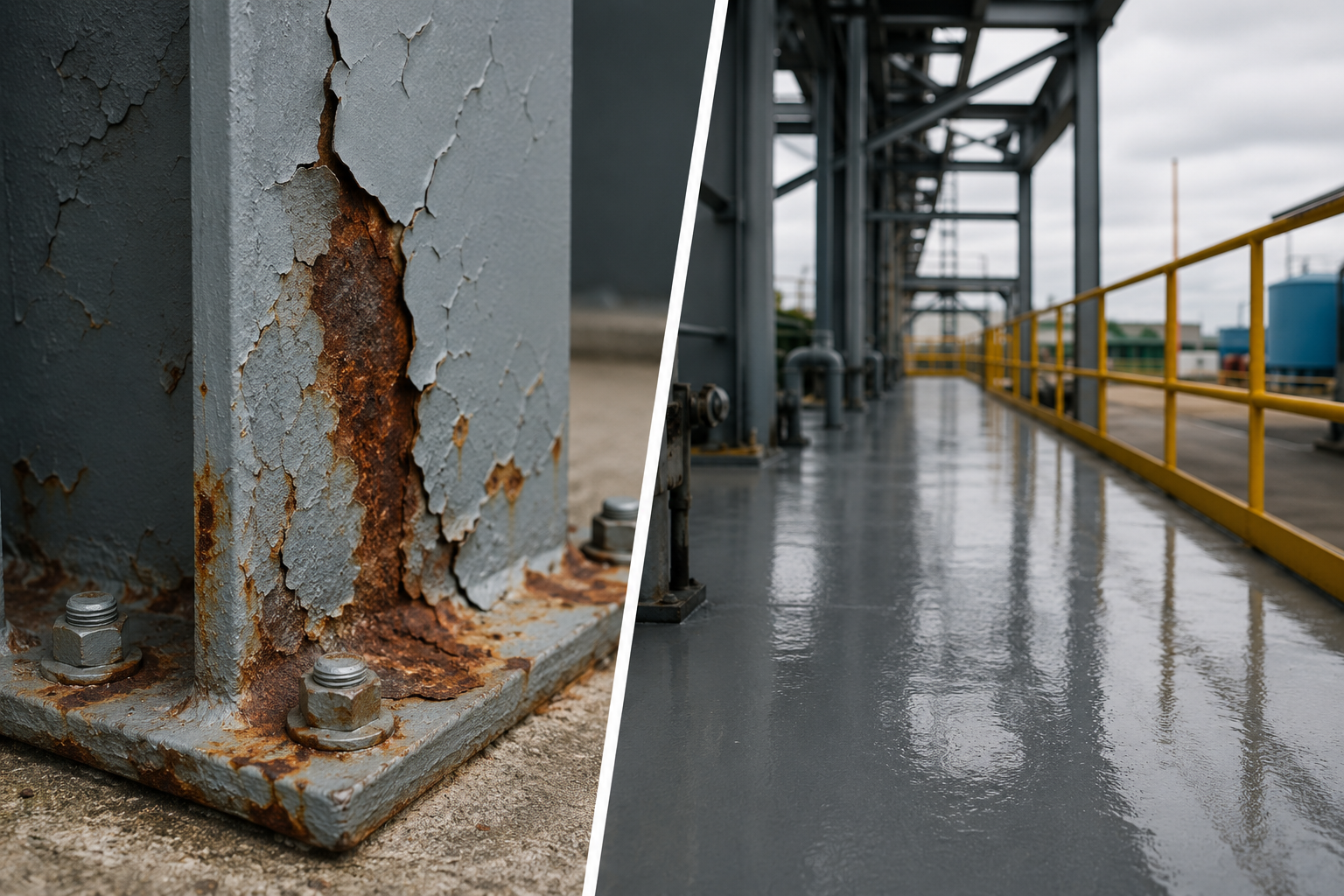
Once coatings fail in these environments, the problem spreads quickly. What starts as a small patch of corrosion turns into larger sections that need to be stripped and redone.
We have seen warehouse columns where coating failure started at the base and spread across full sections within 18 months. The original job looked fine at handover. It just was not done properly.
For a deeper breakdown of how these systems are applied, see industrial painting processes and applications.
Common Problems in Industrial Painting Projects
Most failures are not about the product. They come down to how the job was run.
Surface Preparation Gets Rushed
This is the biggest issue we see.
If steel is not prepared properly, the coating does not bond. Simple as that.
We have taken over jobs where coatings were applied over existing corrosion. Within a year, it started lifting. The only fix was to strip everything back and start again.
That means access costs, labour, and disruption all over again.
The Wrong System Gets Used
Different environments need different systems.
A warehouse floor, a food processing area, and external steel all behave differently. Treat them the same and it will not last.
We still see generic systems used across entire sites. It saves time at the start, but it creates problems later when certain areas fail faster than others.
For guidance on selecting the right contractor for these types of jobs, see how to choose the right commercial painter.
No Planning Around Live Operations
Most sites are operating while the work is being done.
If the job is not staged properly, it affects production, staff movement, and safety.
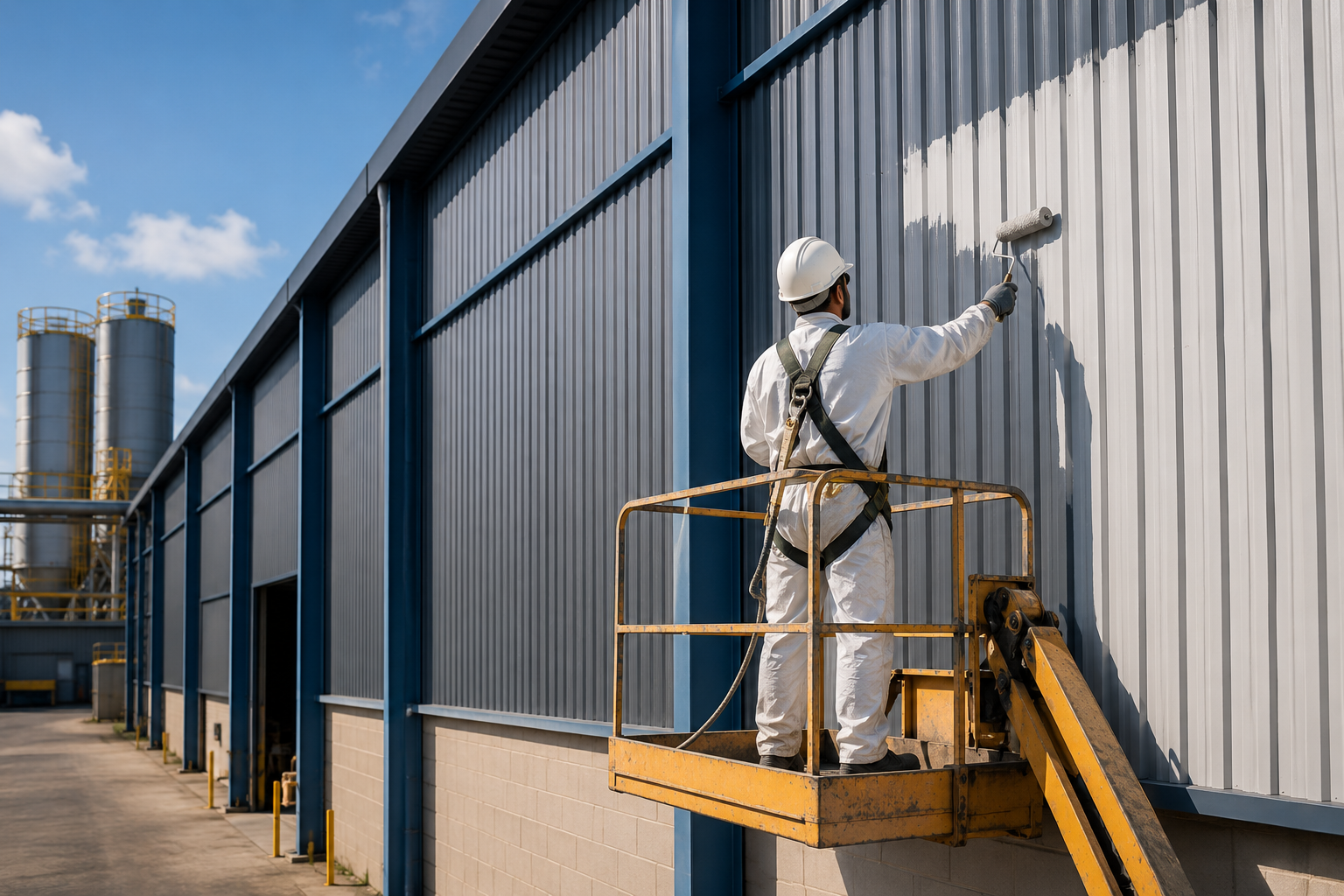
On larger warehouse projects, we will often break the work into multiple zones. One section at a time so the rest of the facility keeps running. That takes planning and coordination with the client before the job starts.
If that planning is not done, the job slows down quickly.
You can also see how downtime is managed in active environments here: minimising business downtime during painting.
Lack of Supervision
Industrial coating work needs to be checked as it is happening.
Surface preparation, coating thickness, curing conditions. These all need to be controlled during the job.
Without supervision, small issues get missed. Those issues turn into failures later.
At Horizon, projects are closely supervised and regularly inspected. That is how we deliver the same result across different sites, not just one.
For industry standards on protective coatings and corrosion control, refer to this overview of industrial coatings systems.
Best Practice Industrial Painting Process
When a job is done properly, it follows a clear process. Nothing complicated, but everything done properly.
Assessment
We start by looking at the condition of the asset and how the site operates.
There is no point specifying a system that cannot be applied without shutting down the business. That needs to be understood upfront.
System Selection
The coating system is selected based on actual conditions.
Temperature, moisture, usage, exposure. These all affect how a system performs.
Getting this wrong at the start leads to early failure.
Planning the Work
This is where most of the value is delivered.
Work is staged to suit the site. That might mean working around shifts, isolating areas, or coordinating with other work.
On multi site projects, this approach needs to be consistent. Otherwise each site ends up with different results and different maintenance timelines.
You can view how Horizon approaches structured delivery across projects here: what we do.
Preparation and Application
Surface preparation is completed to the required standard. Coatings are applied under controlled conditions.
There is nothing complicated here. The difference is in consistency.
Across larger projects, the challenge is delivering the same standard every time. That comes down to systems, supervision, and experienced crews.
Inspection
The finished work is checked properly.
If this step is rushed, problems get missed and show up later. Usually when access is harder and costs are higher.
Consistent Industrial Painting Across Multiple Facilities
Many clients are not dealing with one building. They are dealing with multiple sites.
If one site is done properly and another is not, you end up with different problems at different times.
That creates ongoing cost and management issues.
Horizon operates across multiple states with a consistent approach to delivery, supervision, and quality. The aim is the same result whether the job is in a warehouse in Sydney, a facility in Melbourne, or a site in regional areas.
You can learn more about Horizon’s background and approach here: about Horizon Coatings.
The Cost of Getting It Wrong
When coatings fail early, the impact is not just the cost of repainting.
It usually means:
- Bringing access equipment back on site
- Shutting down areas again
- Managing around staff and operations a second time
- Paying for labour and materials twice
On larger sites, this can turn into a much bigger issue. Delays affect other works. Budgets get stretched. Internal pressure builds because the job has to be explained and fixed.
We have seen second round repairs cost more than the original job because access and disruption were higher the second time.
Choosing the Right Contractor
Industrial painting and coatings are not something you want to redo.
The focus should be on how the contractor runs the job, not just what they quote.
You want to understand:
- How they plan work on live sites
- How they supervise and check quality
- How they manage consistency across multiple areas or sites
- What happens if something does not go to plan
Anyone can apply paint. Not everyone can run a job properly from start to finish.
For a broader overview of selecting professional contractors, see advantages of professional painting services.
Final Word
Industrial painting and coatings are about getting the job done once and not having to deal with it again too soon.
Most of the difference comes down to planning, preparation, and how the work is managed on site.
If you are planning works or dealing with coating failures, you can get in touch with the team to organise a proper assessment and avoid repeat issues.