Most buildings don’t suddenly need repainting. It builds up.
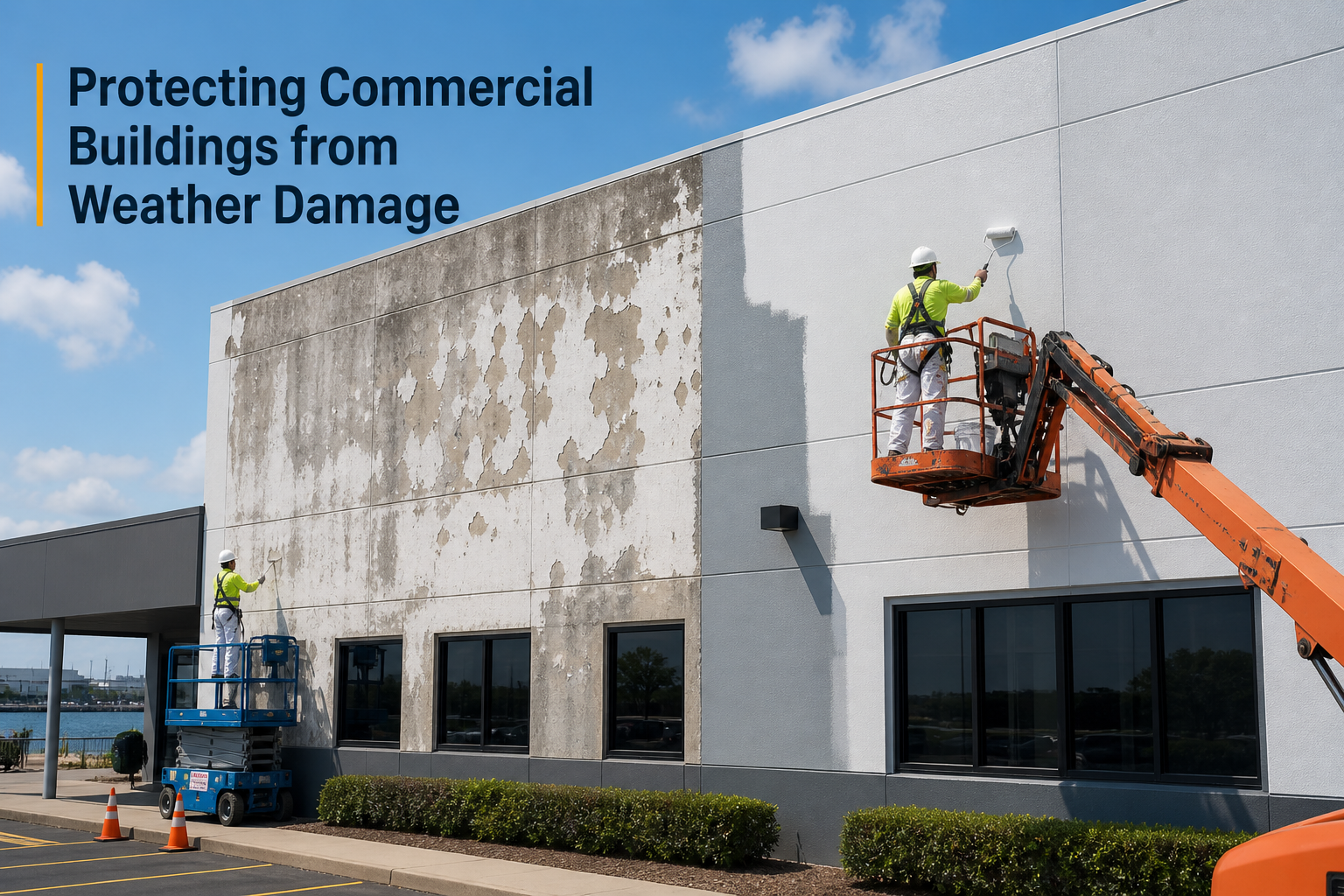
You’ll see one wall start to fade more than the others. Run your hand over it and it leaves a chalky residue. A few cracks show up near joints or around windows. Then water gets in and the job changes from painting to repairs.
That is where commercial exterior painting comes in. Not as a cosmetic job. As a way to stop surfaces breaking down before it turns into something more expensive.
If you are managing a commercial building, this is part of keeping the asset in working order.
Why Exterior Paint Breaks Down Faster Than Expected
Anyone looking after a building knows how quickly things can go backwards.
On walls that cop full sun most of the day, paint will usually start fading after a couple of summers. Leave it longer and it turns powdery. Once it gets to that point, the coating has lost its strength.
Water is what causes the bigger issues. It usually starts in small areas. Around window frames, expansion joints, or anywhere that has been patched before. Once moisture gets behind the paint, it lifts. You see bubbling first, then peeling.
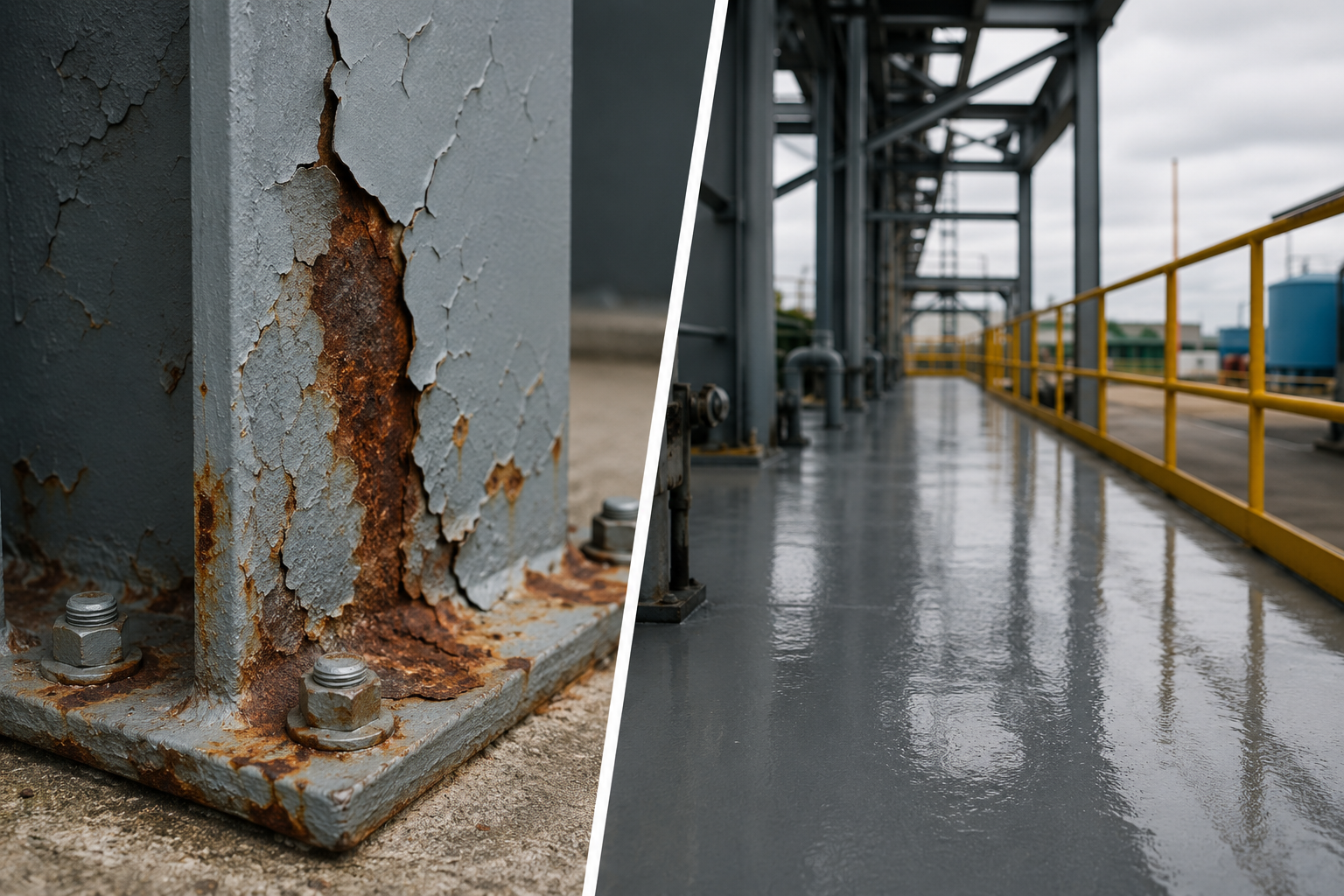
On sites closer to the coast, metal starts to show early signs of rust. Handrails, roller doors, exposed steel. It does not take long if it has not been sealed properly.
Surfaces also move more than people expect. Concrete and render expand and contract with temperature. Over time that movement opens up cracks, especially in older buildings.
None of this is unusual. It is what we see on most sites before a repaint. You can also refer to moisture control guidance for commercial buildings to understand how water affects building performance.
What Exterior Painting Is Actually Doing
Paint on a commercial building is there for a reason.
On concrete, it helps keep water out. Once water gets into concrete, you start seeing cracks and long term deterioration across larger areas.
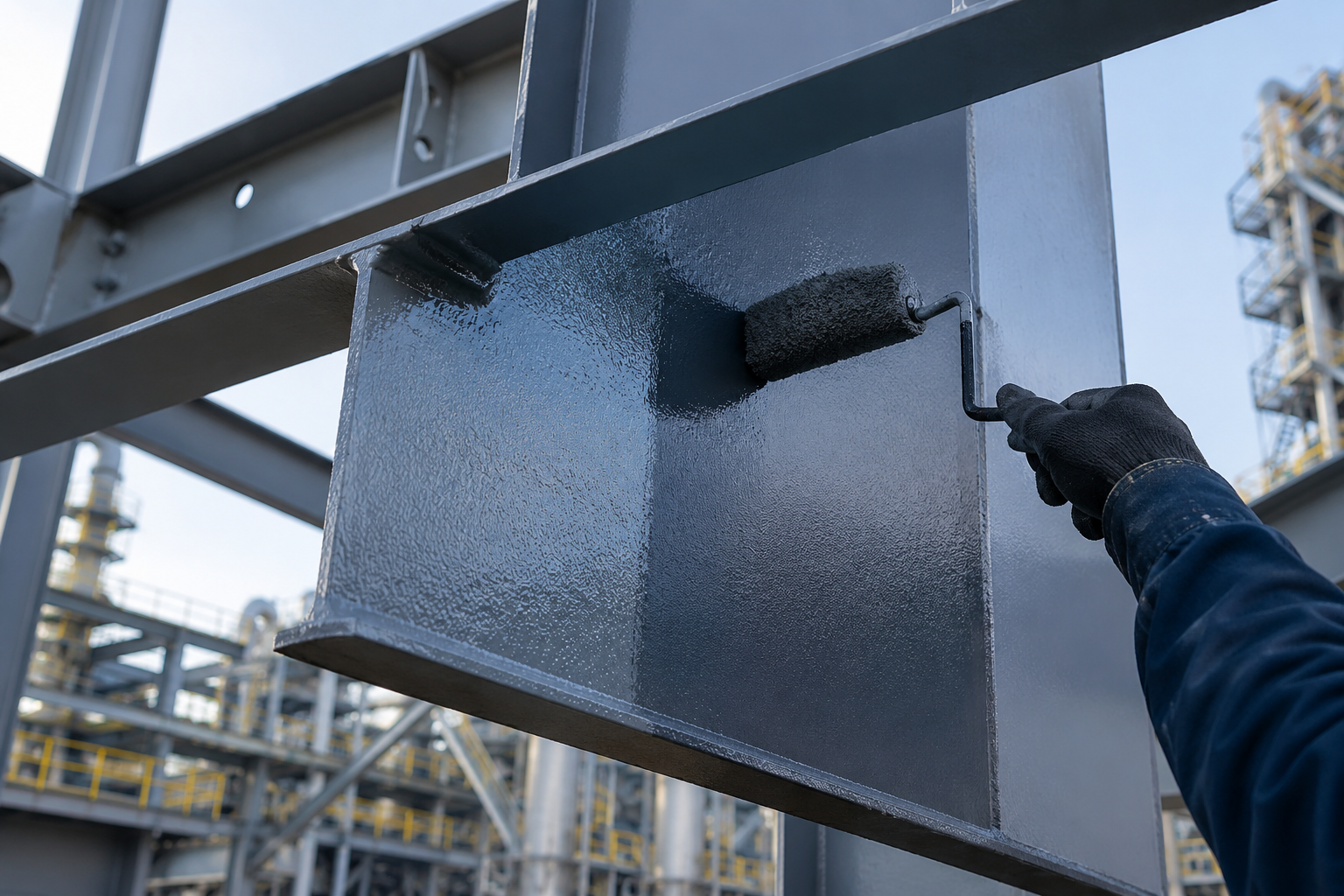
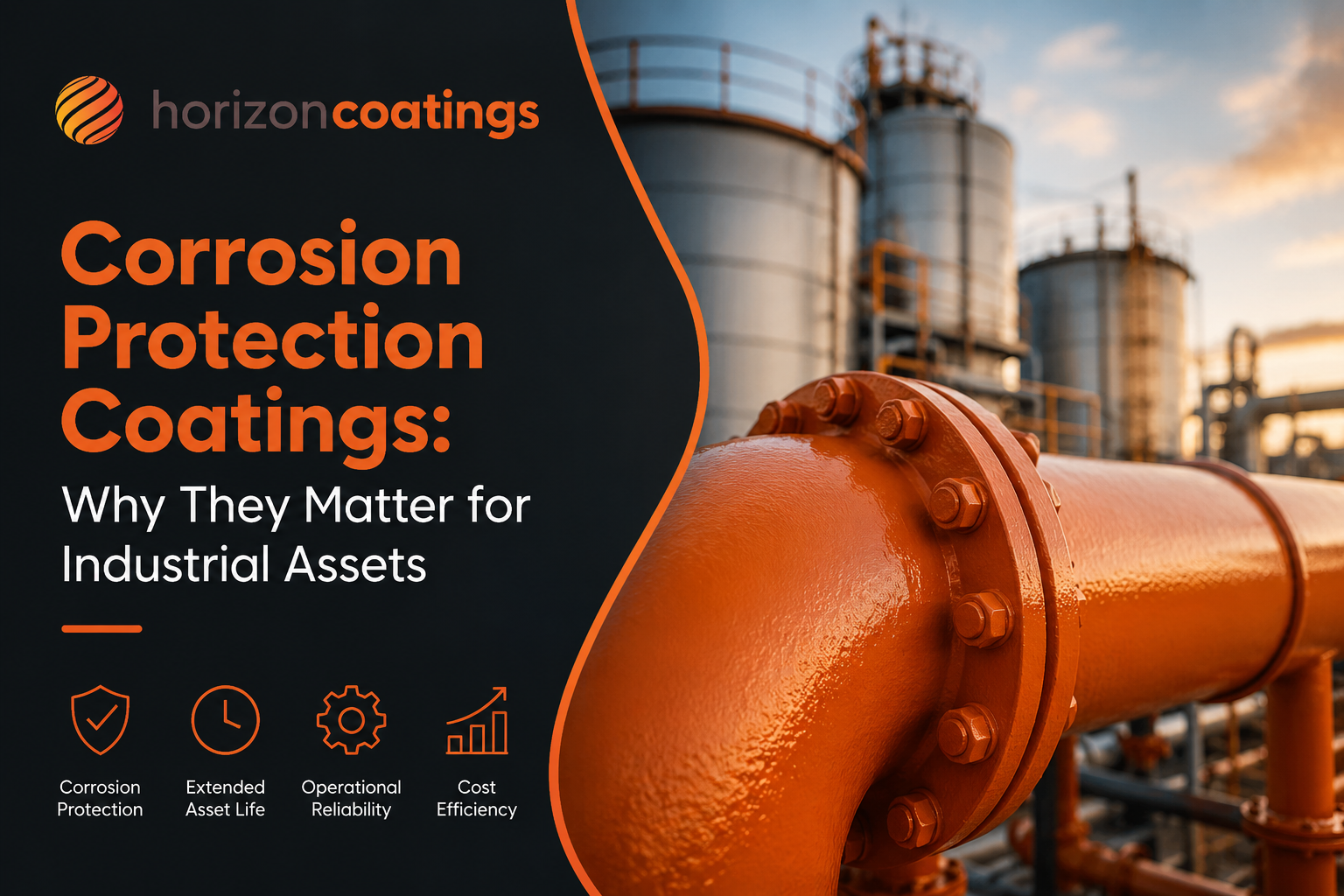
Steel is another one. If it is not protected, rust spreads. On warehouses and industrial sites, that can move quickly across structural elements and fixtures. This is often addressed through industrial painting systems and protective coatings.
Rendered walls are usually where problems show up first. Staining, mould, patch repairs that never quite match. A proper coating system helps keep that stable so you are not constantly fixing the same areas. More on this can be found in acrylic rendering services.
Roof areas get missed as well. Once coatings fail up there, water finds its way in and spreads into other parts of the building.
Most of the time, repainting is about stopping those issues from getting worse.
Signs It Is Time to Repaint
Most buildings do not show everything at once. It usually starts with one or two areas.
Paint fading unevenly, often worse on the sides that get direct sun.
Peeling or flaking around edges, joints, and patched sections.
Cracks in rendered areas, especially around windows and expansion joints.
Rust marks on metal surfaces like handrails, doors, or exposed steel.
Mould or mildew on shaded walls or areas that stay damp. Long term protection can involve waterproof protective coatings.
Most sites we walk through have at least one of these. Often more if it has been left too long. At that point, it is not a question of whether to repaint. It is how much prep work is now involved.
Choosing the Right Commercial Exterior Painting Contractor
There is a clear difference between getting a building painted and getting it done properly.
Preparation is where most of the work sits. Cleaning down surfaces, repairing cracks, sealing problem areas. If that is rushed, the coating does not last. You can see more on this in how to choose the right commercial painter.
The system also needs to suit the building. A warehouse near the coast is exposed to different conditions compared to an office building further inland. The approach should reflect that.
Then there is how the job is run.
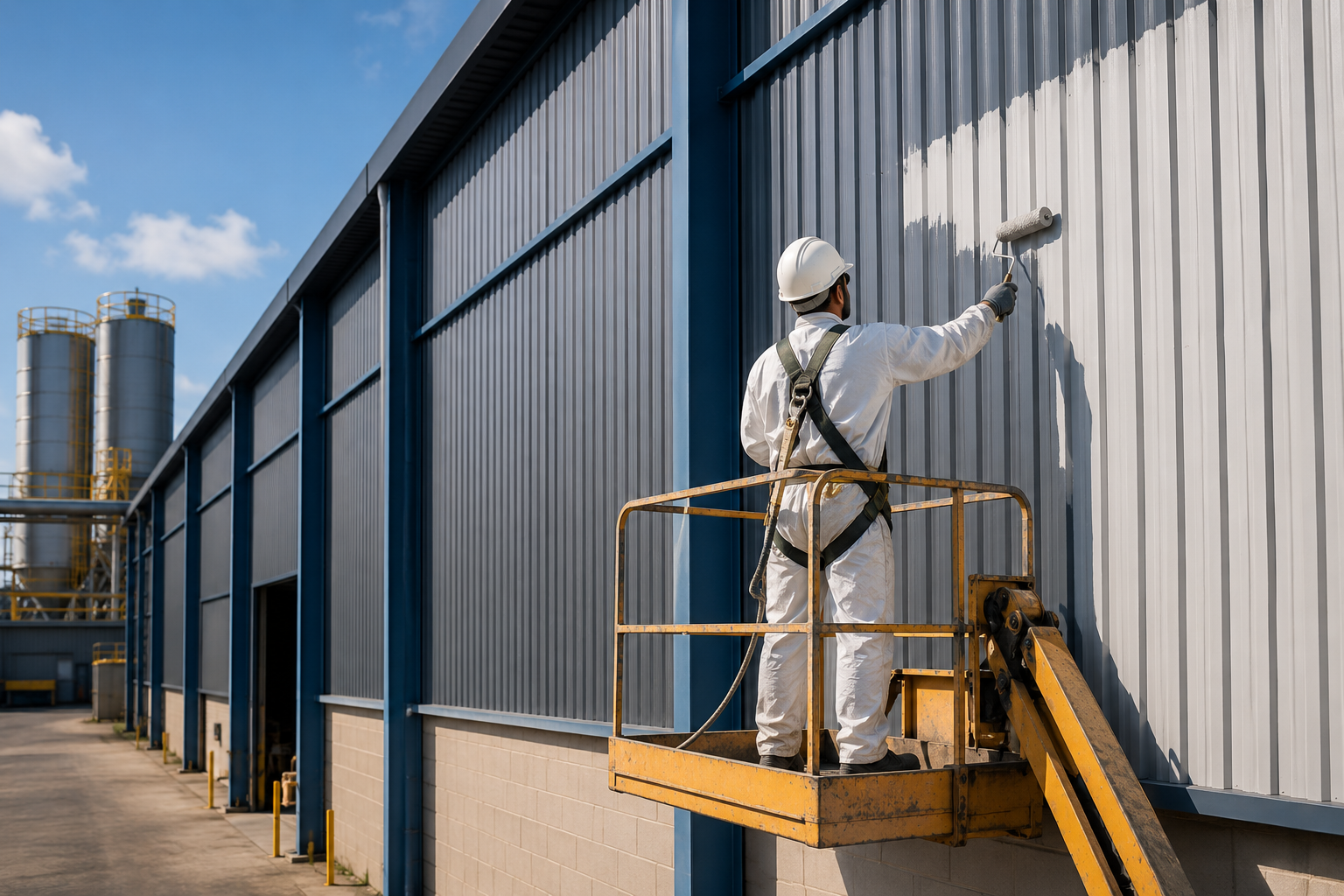
Most commercial sites are active. People working, deliveries coming in, tenants moving through the building. The work needs to fit around that. That means planning access, staging areas, and timing before anything starts.
You only get that from working across different sites over time.
Getting the Work Done Without Stopping Operations
This is usually the main concern.
In most cases, the building does not need to shut down.
Work is broken into sections so key areas stay open. On warehouse jobs, loading docks are handled in stages so trucks can still get in and out without delays.
For office buildings, entry points are planned carefully so staff and visitors can move through as normal. Shared areas can be done after hours if needed. This approach is similar to minimising downtime during office painting.
We have seen full exterior repaints completed while the business kept running the whole time. That only happens when the job is planned properly before it starts.
If it is not planned, that is when it causes problems.
Long Term Value Comes From Doing It Properly Once
There is a big difference between a job that holds up and one that needs attention again in a few years.
When preparation is done properly and the right system is used, most buildings will go years without major issues. In some cases, five to ten years before anything significant needs to be looked at again.
If corners are cut, problems come back earlier. More patching, more maintenance, more cost over time.
There is also the day to day side. A building that looks maintained is easier to manage. Tenants notice it. Clients notice it. It reflects how the place is run. You can see more on this in professional painting outcomes.
That is why many property owners treat commercial exterior painting as part of ongoing maintenance, not something they leave until it gets worse.
Matching the Approach to the Building
Every site is different.
A large office building has different requirements compared to a warehouse, a retail centre, or a facility near the coast.
Some need more protection because of the environment. Others need a balance between durability and presentation.
The approach should reflect how the building is used and what it is exposed to. That comes from understanding the site, not applying the same system everywhere. You can explore broader capabilities on the what we do page.
Speak to a Team That Works on Commercial Sites Every Day
If you are starting to see early signs of wear, it is worth dealing with it before it spreads. Once coatings fail across multiple areas, the job becomes bigger than it needs to be.
Horizon Coatings works across commercial and industrial sites in New South Wales, Queensland, Victoria, and the ACT. The focus is on doing the job properly, keeping sites running, and delivering work that lasts.
If you want a clear view of what is happening with your building, arrange a site inspection. You will get a straightforward explanation of what is going on and what it will take to fix it without getting in the way of your operations.