Most commercial interior painting jobs look fine when they are handed over.
Six months later is when you see what was really done.
Walls start marking where people walk past every day. Corners wear through. You notice one level looks slightly different to another under the lights. Then someone realises parts of the building need to be painted again.
We get called into those jobs more often than we should.
It is rarely the paint itself. It is how the job was run, what was underneath the surface, and whether the right system was used for the space. If you are planning a project, it is worth understanding how commercial painting services are structured from the start.
How Commercial Interior Painting Is Managed on Live Sites
Most sites are still operating while the work is being done. Offices are occupied. Tenants are working. Access is tight.
You cannot just move through the building and paint everything at once.
The work has to be staged properly. One area at a time. Finished, cleaned, and handed back before the next section starts.
On a recent project, we worked across three office levels over ten night shifts. Each section was completed overnight and reopened the next morning. Staff walked back into a usable space every day.
On another job we stepped into, there was no staging plan. Two trades were booked into the same areas, sections were left half finished, and access kept changing. The client ended up delaying their own operations just to let the job catch up. This is exactly why minimising downtime during office painting needs to be planned properly.
That is not a painting issue. That is a planning issue.
Surface Preparation Is Where Jobs Fail
What sits under the paint matters more than the paint itself.
Walls can look fine until you start working on them. Then you find old patch repairs that were never sanded properly, moisture damage near ceiling lines, or layers of previous coatings that never bonded.
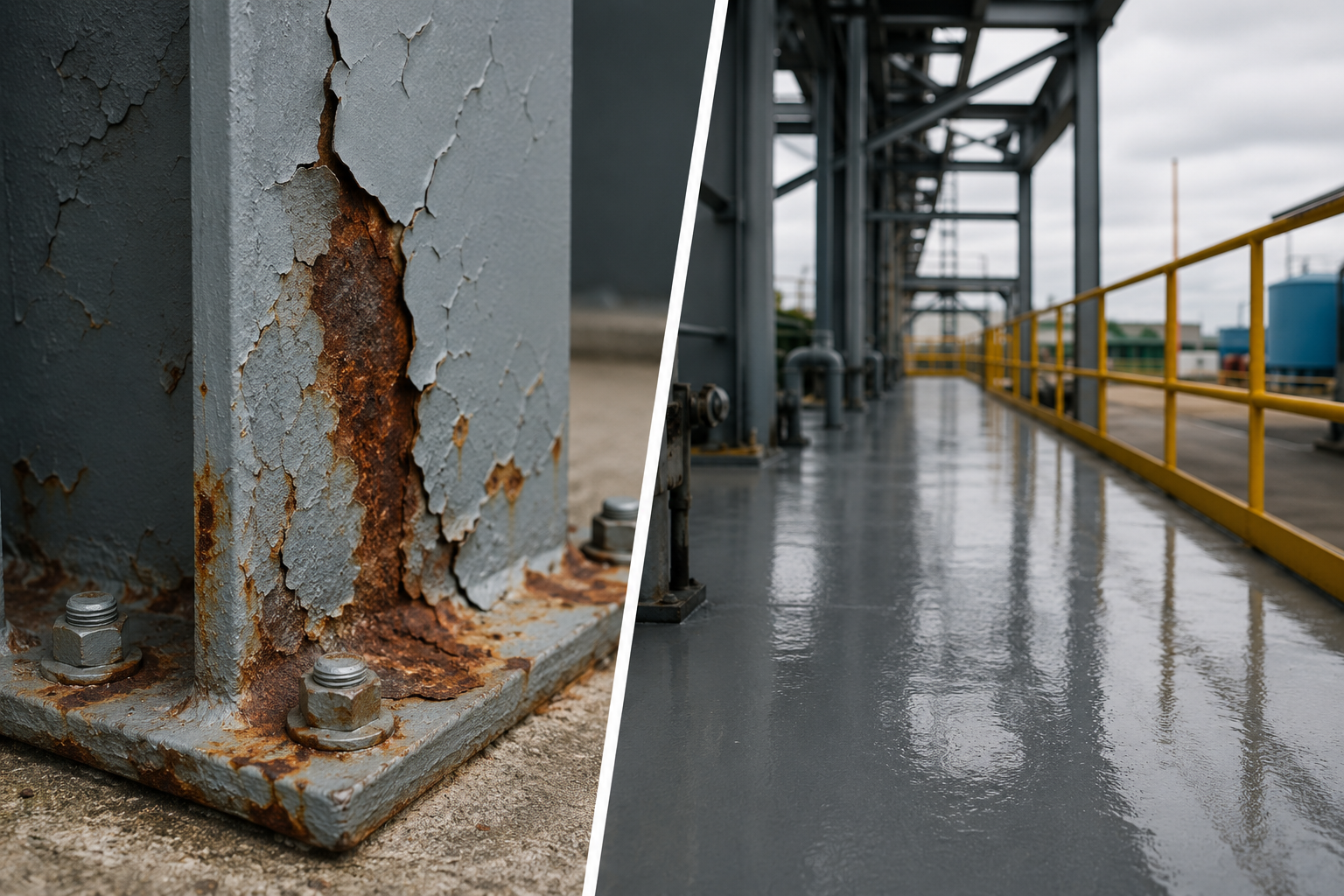
We were brought into an office where a contractor painted straight over patched plaster without sealing it. Within twelve months, you could see cracking along every repair line and sections starting to peel near the joins. The only option was to strip it back and redo the area properly. That meant moving staff out of those sections again and repainting walls that had already been signed off once. This is one of the key reasons professional painting services tend to deliver better long-term results.
That situation comes from skipping steps early.
Using the Right System for the Space
Different areas take different levels of wear.
A boardroom might stay untouched most of the week. A corridor gets hit constantly. Bags, chairs, cleaning equipment, people brushing past all day.
We have seen corridors painted with standard low durability coatings because they looked fine at handover. Within a few weeks, you could see marks along the walls at shoulder height. Within a few months, the finish had worn unevenly along the main walkways.
At that point, the only way to fix it is repainting with a more durable system.
A commercial interior painting contractor should be selecting products based on how the space is used, not just how it looks on day one. In some cases, combining painting with epoxy coating systems can improve durability in high-wear environments.
Keeping the Finish Consistent Across the Building
Consistency is where problems show up on larger jobs.
Same colour does not always mean the same result. Differences in batches, application, and even the way light hits a surface can change how it looks.
We have seen a building where one level had a slightly flatter finish than the others because a different batch of paint was used and applied by another crew. Under natural light it looked fine. Under internal lighting at night, the difference was obvious across the whole floor.
The fix was not a touch up. The entire level had to be repainted to match the rest of the building.
That comes down to control during the job. Same materials, same method, and proper supervision from start to finish. Industry guidelines around coatings and application standards can also be referenced through organisations like Master Painters Australia.
Managing the Work Properly From Start to Finish
Painting is one part of it. Managing the job is what keeps it on track.
That means having a clear program before starting, knowing when areas will be ready, and checking work as it progresses.
We have stepped into jobs where sections had to be repainted because preparation was rushed the first time. That added more time than doing it properly would have in the first place, and it meant the client had to deal with the same disruption twice. If you are unsure where to start, this guide on choosing the right commercial painter can help.
If the job is managed properly, those problems do not build up.
What It Comes Back To
Most issues in commercial interior painting follow the same pattern.
Preparation is rushed. The wrong system is used in high traffic areas. Different parts of the job are not controlled the same way.
Everything looks fine at the end. Then within six to twelve months, the problems start showing. Walls mark, finish wear, and sections need to be redone.
When the job is planned properly, matched to how the building is used, and carried through with consistent supervision, it holds up. You are not repainting the same areas again a year later.
That is what you are trying to avoid.