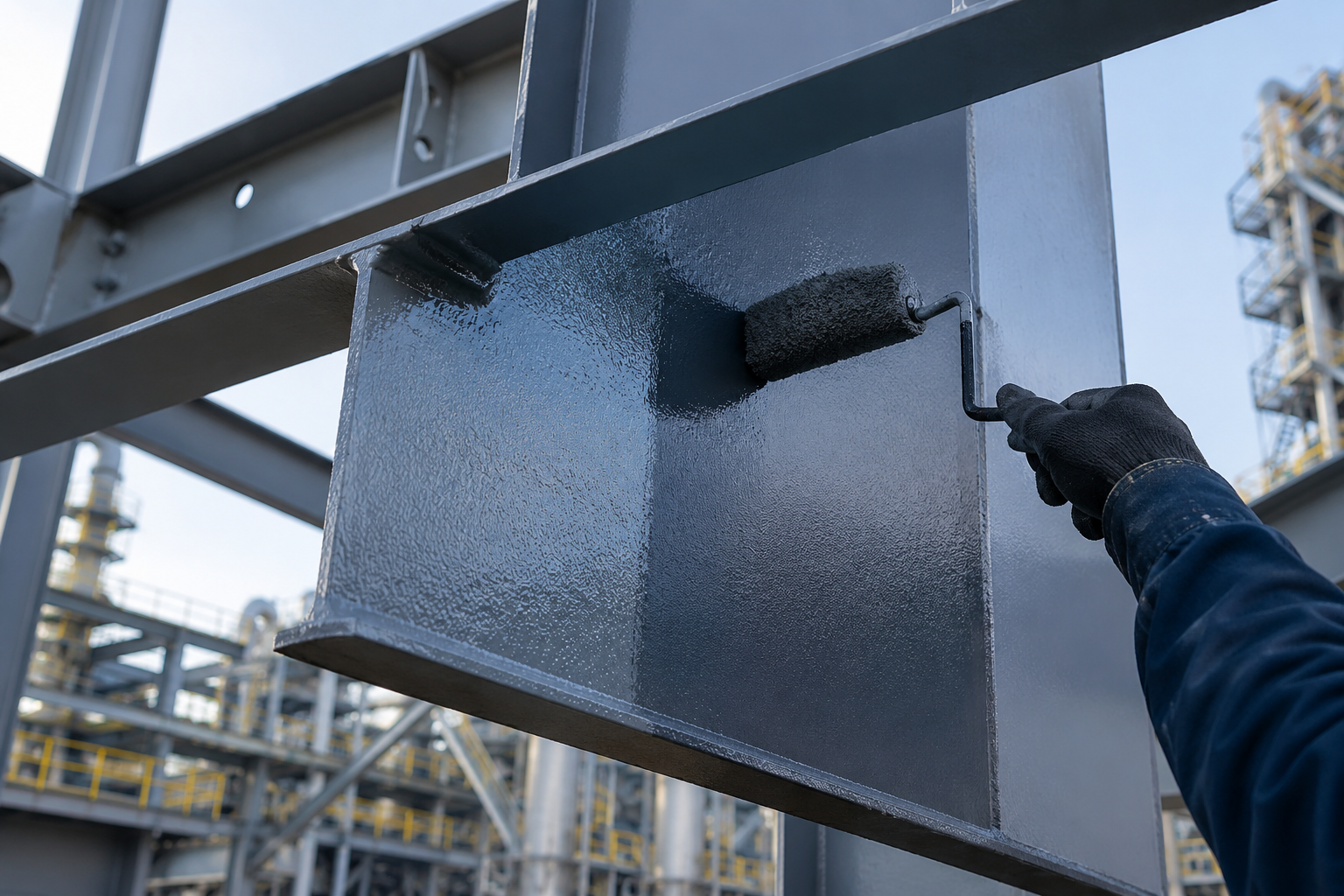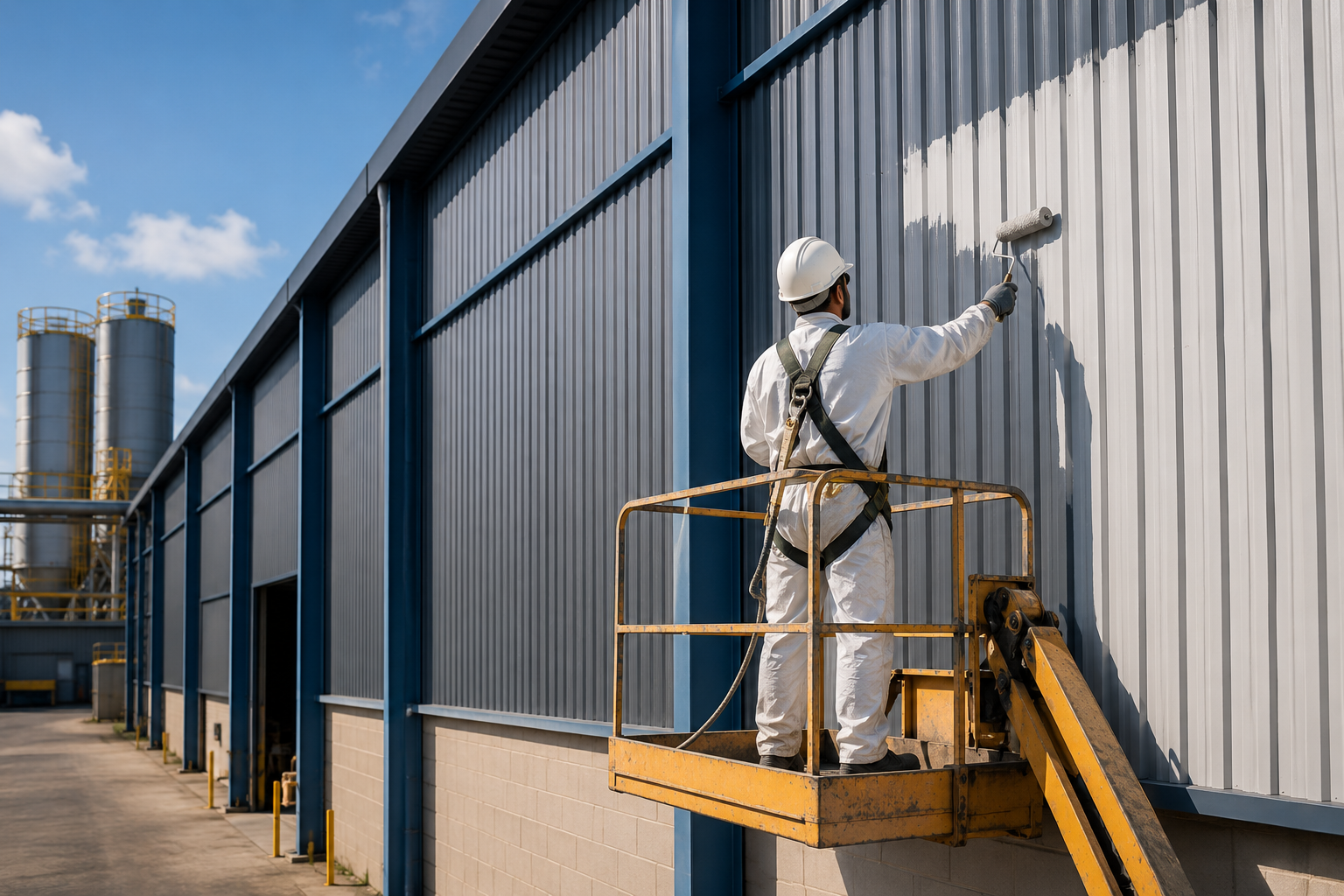
Corrosion does not start when steel turns orange.
It starts much earlier, often at a microscopic level, when moisture, oxygen and contaminants begin reacting with exposed steel surfaces. In industrial environments, that process accelerates quickly. Salt in coastal air, chemical exposure, condensation, cleaning agents and mechanical damage all break down protective systems over time.
The problem is not just the corrosion itself. The real issue is what happens once it spreads unnoticed through a facility, warehouse, plant or infrastructure asset.
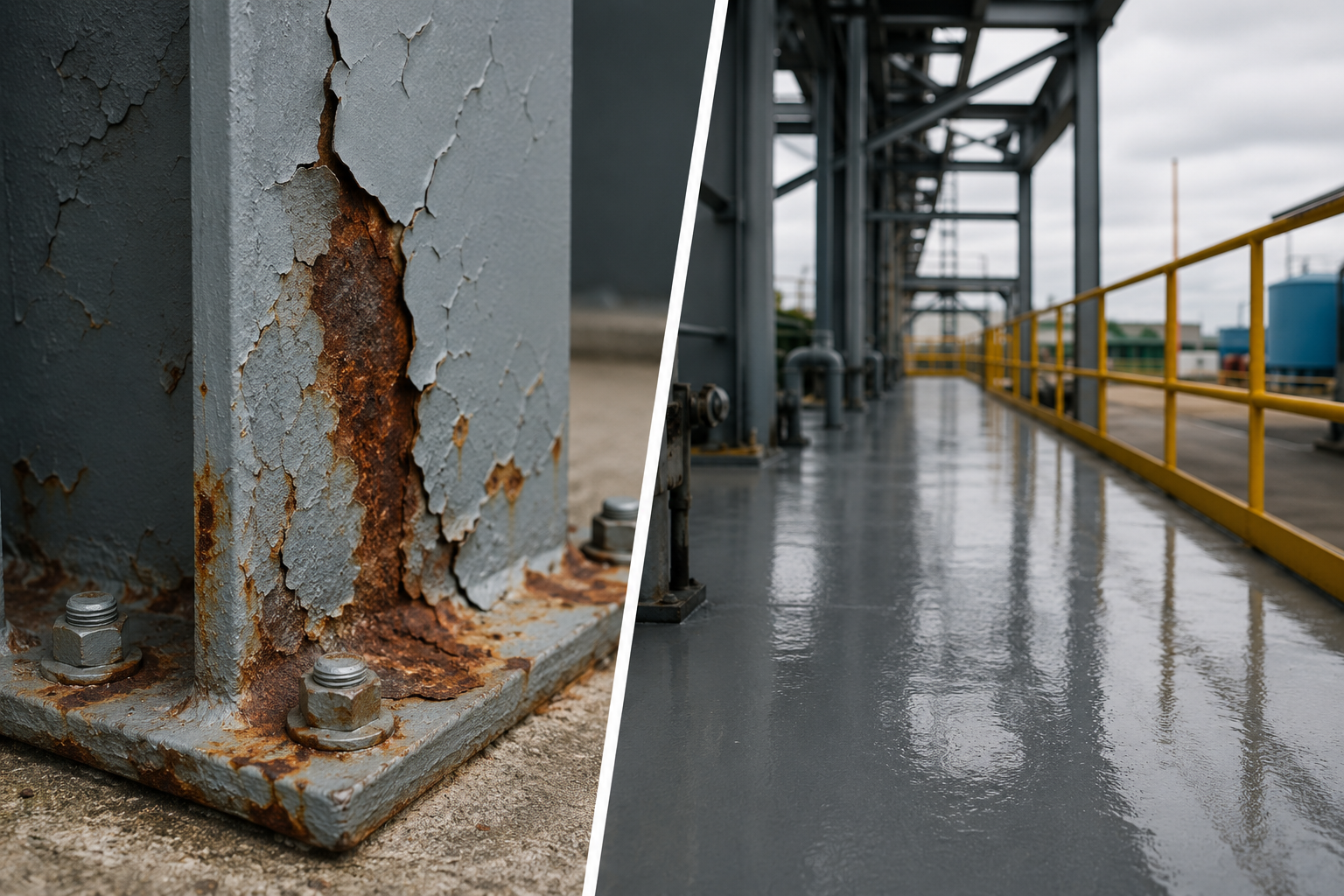
A small coating failure around a roof penetration, joint, handrail or steel support can allow moisture beneath the coating system. From there, corrosion continues underneath the surface long before it becomes visible. By the time blistering, rust staining or coating delamination appears, the repair scope is often far larger than expected.
That is why businesses invest in Corrosion Protection Coatings in Sydney. Not for appearance. Not for glossy finishes. They do it because replacing structural steel, shutting down operational areas, or repairing deteriorated concrete costs serious money.
For industrial sites, commercial facilities, and infrastructure assets, protective coatings are part of asset protection. Ignore them for too long and the problems compound quickly.
Not Every Protective Coatings Contractor Understands Industrial Environments
Industrial projects are different to standard repainting work.
You are often dealing with active facilities, restricted access, staged shutdowns, safety procedures, traffic management, and tight operational windows. In some facilities, work can only happen overnight or across weekends because production cannot stop during business hours.
That changes how coating systems are planned and delivered.
An experienced protective coatings contractor understands how different environments affect product selection and application methods. A food processing facility has different requirements to a heavy manufacturing plant. External steel exposed to salt air needs different protection compared to internal warehouse framing.
The wrong product system might look fine initially, then fail early once exposure and traffic increase.
That is where proper inspection and planning matter. Not guessing. Not applying the same specification across every project.
Why Corrosion Becomes Expensive Fast
Corrosion rarely stays isolated.
Once protective coatings fail, moisture, salt, and contaminants begin attacking the substrate underneath. On steel structures, that usually means rust expansion and coating breakdown. On concrete surfaces, it often leads to cracking, spalling, moisture penetration, and surface failure.
The real cost is not the rust itself. It is what happens around it.
We have seen warehouses where corrosion around roof steel eventually forced access restrictions underneath active work areas. We have seen factory shutdowns delayed because flooring systems could not handle continued forklift traffic. We have seen repaint jobs turn into structural repair projects because the original coating failure was ignored for too long.
Most facility managers already know this pattern. Coating failures become much larger repair projects when they sit untouched for years.
Why Sydney Buildings Take a Beating
Sydney conditions are hard on commercial and industrial buildings.
Coastal exposure affects assets surprisingly far inland. Salt in the air settles onto exposed steel, rooftops, handrails, and plant equipment. Add moisture, UV exposure, and heavy traffic and coatings start breaking down much faster.
Industrial areas create another layer of stress. Warehouses, factories, loading docks, and processing facilities deal with constant wear from forklifts, pallet movement, machinery, cleaning chemicals, and washdowns.
A warehouse near Port Botany has very different coating requirements compared to an internal distribution facility in Western Sydney. The same applies to hospitality venues near the coast compared to commercial offices in the CBD.
That is why proper Corrosion Protection Coatings in Sydney are never one size fits all. The right system depends on where the building is, what it is made from, and how hard the surfaces get used every day.
Most Coating Failures Start Before The First Coat Goes On
A lot of failed projects come back to preparation.
The coating itself may have been fine. The problem was what sat underneath it.
We regularly see surfaces coated over existing contamination, loose material, moisture, or failed previous coatings. It might look acceptable when the project finishes, but six months later the problems start appearing.
On industrial sites, preparation often takes longer than the coating application itself.
Depending on the substrate and environment, that may involve abrasive blasting, pressure cleaning, concrete grinding, crack repairs, rust treatment, moisture testing, or surface profiling before any coating is applied.
If preparation gets rushed, the coating system is already compromised before the site goes back into operation.
That is one reason experienced industrial clients pay close attention to the process, not just the final colour.
Protective Coatings in Sydney Are About More Than Appearance
Most commercial and industrial clients are not chasing decorative finishes.
They want surfaces that last.
Facility managers want to reduce repeat maintenance. Property owners want to avoid major repair costs later. Operations teams want flooring systems that can handle forklifts, foot traffic, washdowns, and heavy use without constant patch repairs.
For active commercial sites, downtime matters just as much as the coating itself.
A failed floor in a warehouse can interrupt deliveries. Corrosion around structural steel can create safety concerns. Deteriorating surfaces in customer facing areas affect how tenants, staff, and visitors see the business.
That is why properly applied protective coatings in Sydney are usually tied directly to long term operating costs. If the coating system lasts longer, the building stays operational longer with fewer interruptions.
Why Cheap Coating Work Usually Costs More Later
Most experienced facility managers have dealt with this before.
A contractor prices cheaply. Preparation gets reduced. The wrong products get specified. Supervision drops off once the project starts.
Everything looks acceptable at handover.
Then two or three years later the same surfaces are failing again.
The second repair is almost always more expensive because now the substrate underneath has deteriorated further. More preparation is required. More operational disruption is involved. Sometimes sections need replacing altogether instead of simply recoating them.
That is why experienced asset owners focus heavily on long term value, not just upfront price.
They would rather deal with the problem properly once than repeat the same project again a few years later.
Choosing The Right Team For Corrosion Protection Coatings in Sydney
Industrial coating projects need planning, supervision, and communication from start to finish.
At Horizon Coatings, we work across warehouses, infrastructure projects, commercial facilities, hospitality venues, education sites, and industrial environments throughout NSW, Queensland, Victoria, and the ACT.
Our projects are closely supervised because coating failures usually happen when details are missed. Surface preparation, product selection, staging, safety procedures, and communication all matter on active sites. Safe Work Australia’s guidance on managing risks of plant in the workplace also reinforces the need to identify and manage safety risks around workplace plants and equipment.
We understand that most clients are trying to achieve the same thing. Keep the asset protected, minimise disruption, and avoid having to repeat the work again too soon.
If your facility is showing signs of coating breakdown, rust, concrete deterioration, or surface wear, now is the best time to deal with it before the repairs become larger and more disruptive.
Horizon Coatings provides commercial and industrial Corrosion Protection Coatings in Sydney for warehouses, factories, infrastructure, and high traffic facilities. If you need practical advice on protective coating systems for your site, contact our team to arrange an inspection or project discussion.