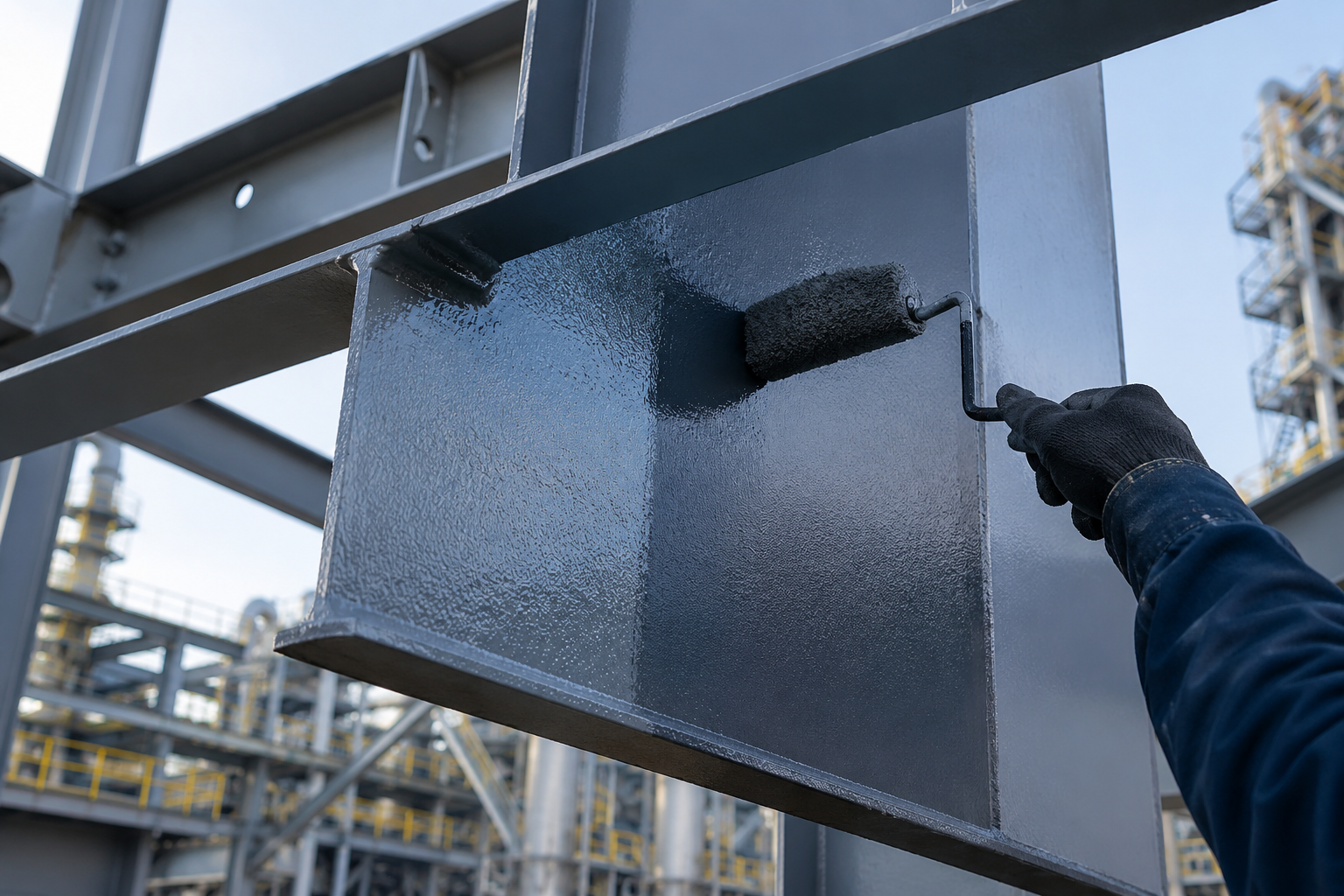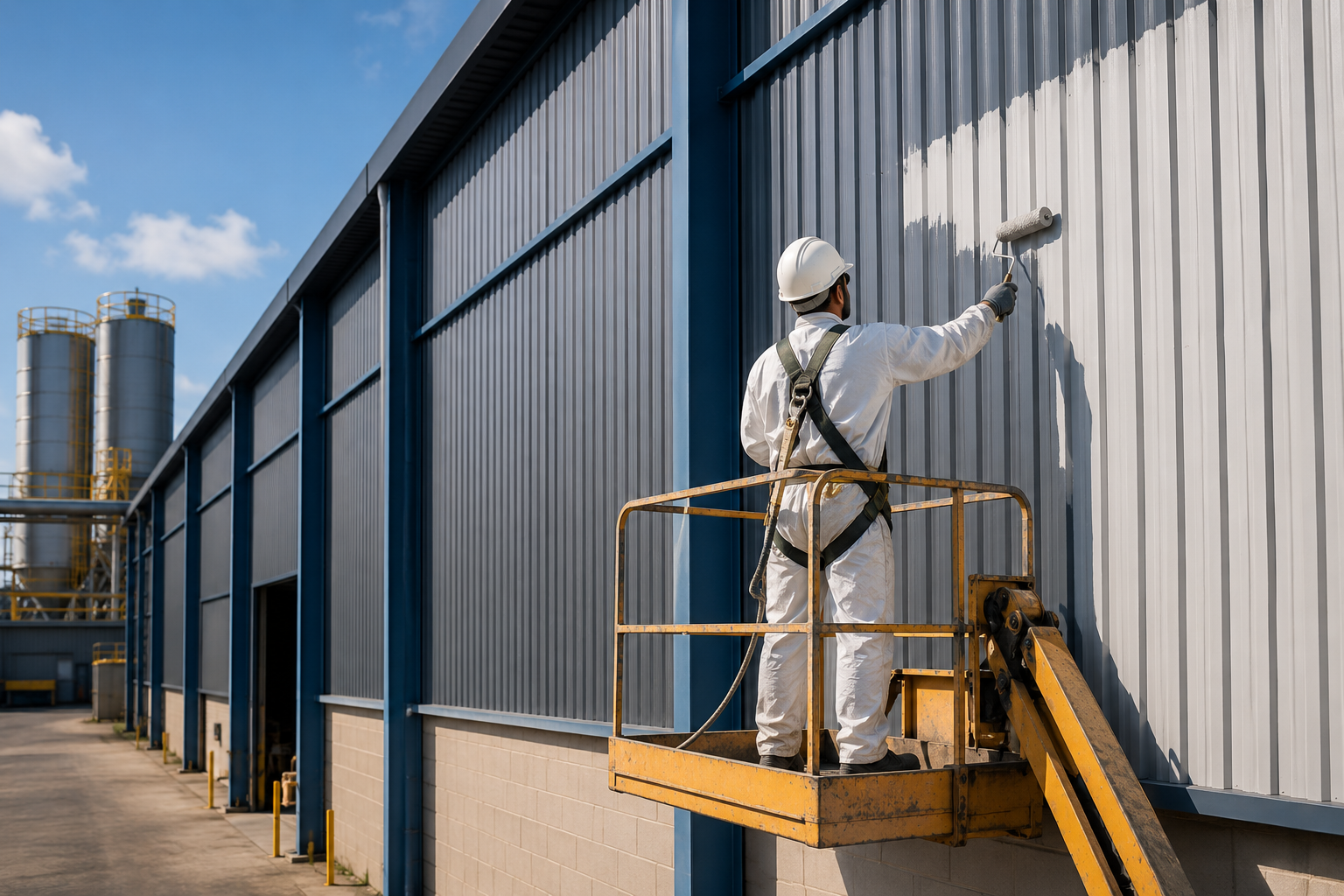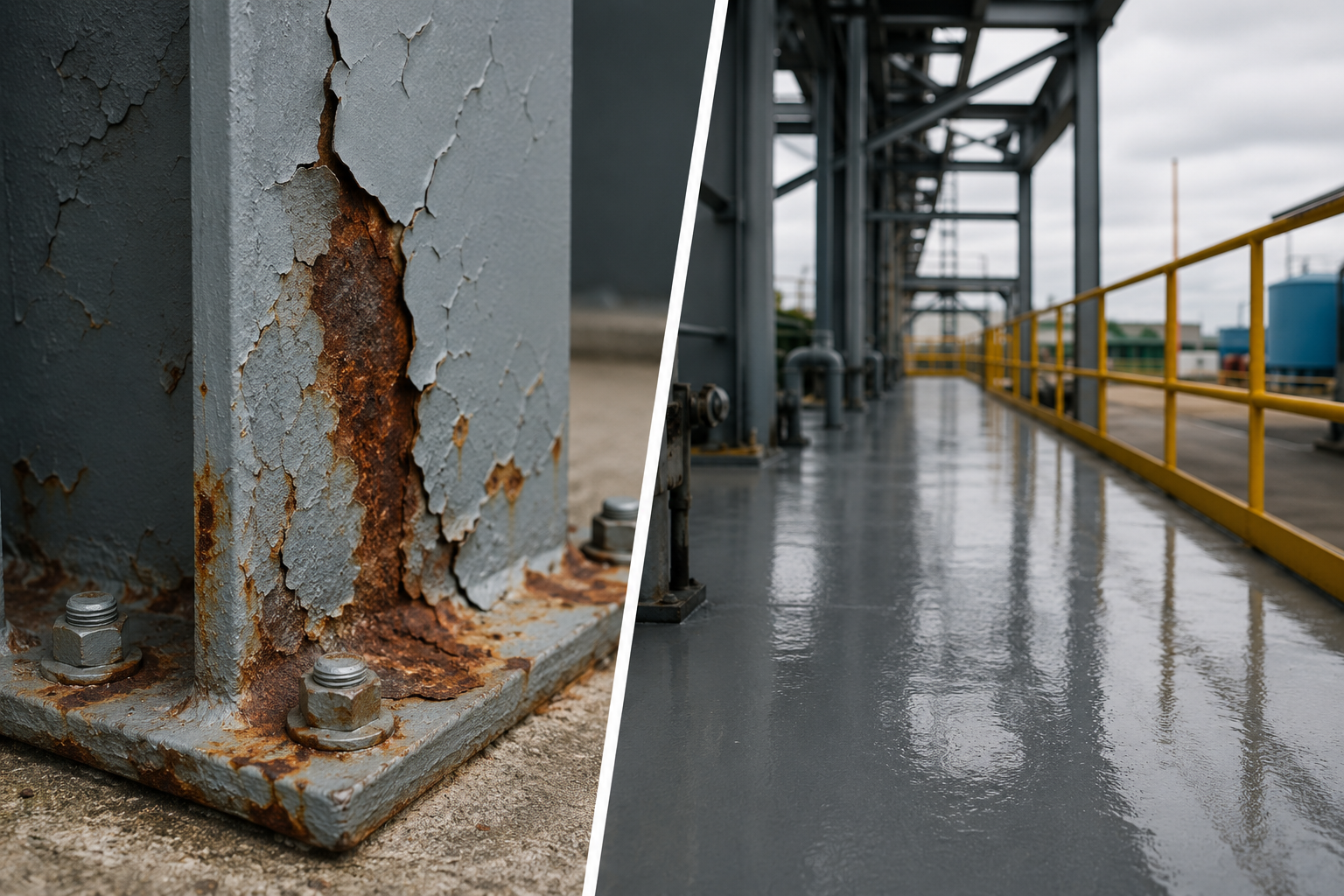
Steel does not suddenly start rusting the day you notice orange stains on a beam or handrail.
The damage usually started months, sometimes years, earlier.
A small scratch from a forklift, water getting in around a roof penetration, or a coating that never bonded properly can all allow moisture beneath the surface. From there, corrosion continues out of sight. By the time blistering, peeling or rust staining appears, what could have been a straightforward repair often becomes a much larger project.
That’s why Premature Coating Failure matters. It’s not simply about paint failing. It’s about protecting commercial buildings, industrial facilities and infrastructure before small defects become expensive repairs.
What Is Premature Coating Failure?
Premature Coating Failure happens when a coating breaks down well before it should.
Every coating system has an expected service life. The exact timeframe depends on the environment, the products used and how the work was completed. If a coating begins peeling, blistering, cracking or allowing corrosion after only a few years, there is usually an underlying reason.
Sometimes the wrong coating was selected.
Sometimes the surface was not prepared properly.
Sometimes the coating was applied under poor weather conditions.
Often, it is a combination of several factors rather than one single mistake.
If you’re interested in how protective systems prevent corrosion over the long term, read our article on Corrosion Protection Coatings for Industrial Assets.
Surface Preparation Is Usually Where Problems Begin
Most coating failures can be traced back to preparation.
Steel can appear clean while still carrying mill scale, salts or other contaminants that affect coating adhesion. A newly applied coating may look sound initially, but if the surface has not been prepared correctly, moisture can eventually work beneath the coating and cause it to lift prematurely.
Concrete creates similar problems. If moisture levels are too high or the surface has not been prepared correctly, coatings can lose adhesion surprisingly quickly.
An experienced protective coatings contractor spends far more time preparing a surface than applying paint. Cleaning, abrasive blasting, grinding and testing are rarely noticed once the project is finished, but they have a major influence on how long the coating will perform.
Every Environment Needs a Different Coating System
Not every building has the same operating conditions.
A warehouse deals with constant forklift traffic.
A food processing facility is washed down regularly with cleaning chemicals.
A coastal property is exposed to salt carried in the air every day.
A manufacturing plant may experience heat, abrasion and chemical exposure all within the same area.
Applying the same product across each of these environments rarely delivers the best result.
A qualified protective coating systems contractor assesses how a facility operates before recommending products. The objective is to install a coating system that matches the environment rather than simply applying the same specification to every project.
Small Defects Allow Moisture Behind the Coating
Most corrosion starts where people are not looking.
Corrosion commonly begins around roof penetrations, pipe supports, handrails, expansion joints and steel columns that have been damaged by machinery. These are all areas where moisture can enter if the coating system has been compromised. None of those defects looked significant at first.
Over time, water found its way beneath the coating.
The coating still looked sound across most of the structure, but corrosion continued underneath until blistering eventually appeared.
By then, the repair area was much larger than the original damage.
Regular inspections help identify these small defects while repairs are still simple and affordable.
Application Conditions Matter More Than People Think
A good product can still fail if it is applied under the wrong conditions.
Temperature, humidity and moisture levels all affect how coatings cure and bond to the substrate.
In some cases, the coating itself is suitable, but it is applied before temperature, humidity or surface moisture are within the manufacturer’s recommended limits. That can significantly reduce the life of the coating. The failure was not caused by the product. It was caused by the application.
Professional industrial coating services involve checking environmental conditions throughout the project because those readings directly affect long term performance.
Daily Operations Damage Coatings Faster Than Expected
Commercial and industrial facilities never stand still.
Forklifts clip bollards.
Pallets scrape steel columns.
Maintenance crews remove pipework and access covers.
Equipment is moved through loading docks every day.
Every impact creates another entry point for moisture.
The damage may only be a few millimetres wide, but that’s enough for corrosion to begin if it is left untreated.
Local repairs completed early are almost always simpler than replacing large sections of failed coating later.
Our article on Industrial Repainting explains when facilities should repair damaged coatings before larger repainting projects become necessary.
Corrosion Never Stops Working
Steel is always trying to return to its natural state.
A coating slows that process by separating the steel from moisture, oxygen and contaminants.
Once that barrier is broken, corrosion starts again.
This is why corrosion protection coatings are designed as long term protection rather than cosmetic finishes. Their purpose is to reduce deterioration, extend asset life and delay expensive structural repairs.
Experienced corrosion control contractors understand that maintaining the coating is usually far less expensive than replacing the asset underneath it.
Prevention Always Costs Less Than Rectification
Most cases of Premature Coating Failure can be avoided.
That starts with choosing suitable industrial coatings for the operating environment.
It continues with proper preparation, careful application and routine inspections throughout the life of the asset.
Facilities that follow this approach generally avoid repeated scaffold hire, emergency shutdowns, large scale steel repairs and unnecessary disruption to normal operations.
If you’re planning future coating work, our guides on Industrial Painting Sydney and Commercial Painting Sydney explain how professional coating systems help protect commercial and industrial facilities over the long term.
Protect Your Assets Before Minor Damage Becomes Major Repairs
By the time a coating starts peeling or rust becomes visible, the real problem has often been developing for much longer.
The sooner damaged coatings are identified, the easier they are to repair.
Horizon Coatings works with commercial property owners, facilities managers, builders and industrial operators on commercial and industrial coating projects across its operating regions: Sydney, Melbourne, Brisbane and Canberra.
Our team delivers industrial coating services backed by careful planning, detailed surface preparation and close project supervision to help assets perform for the service life they were designed to achieve.
If you’ve noticed signs of Premature Coating Failure, or you’re planning maintenance before problems develop further, contact Horizon Coatings to arrange an inspection and discuss the right coating solution for your facility.
Frequently Asked Questions
What causes premature coating failure?
Premature coating failure is usually caused by a combination of factors rather than one issue alone. Poor surface preparation, selecting the wrong coating system, unsuitable application conditions, moisture ingress and physical damage can all shorten the life of a coating. Identifying the cause early helps prevent more extensive repairs later.
How can you tell if a protective coating is starting to fail?
Early warning signs include blistering, peeling, cracking, chalking, rust staining and areas where the coating is lifting away from the surface. These issues often appear around joints, handrails, roof penetrations and other high wear areas. Regular inspections can identify problems before corrosion spreads beneath the coating.
Can premature coating failure be repaired, or does the whole surface need repainting?
Not always. If the damage is identified early, localised repairs may be enough to restore protection. However, if corrosion has spread beneath the coating or large sections have lost adhesion, a more extensive recoating program may be required. An inspection will determine the most appropriate solution.
How long should industrial coatings last?
The lifespan of industrial coatings depends on the environment, the coating specification and the quality of the application. Coatings in harsh industrial or coastal environments generally require more frequent maintenance than those in lower exposure conditions. A properly specified and applied coating system should achieve its intended service life when maintained appropriately.
Why is surface preparation so important before applying a coating?
Surface preparation creates the foundation for the coating system. Dirt, rust, salts, old coatings and other contaminants can prevent the coating from bonding correctly. Even high quality products may fail early if the surface has not been properly prepared before application.
When should commercial buildings be inspected for coating damage?
Commercial and industrial properties should be inspected regularly as part of their maintenance program, particularly after severe weather events or in high exposure environments. Early identification of coating damage allows repairs to be completed before corrosion spreads and larger restoration works become necessary.
How can Horizon Coatings help prevent premature coating failure?
Horizon Coatings works with commercial property owners, facilities managers, builders and industrial operators to assess existing coating systems, recommend suitable solutions and deliver professionally applied protective coatings. By focusing on proper preparation, appropriate product selection and quality workmanship, we help clients maximise the service life of their coating systems.