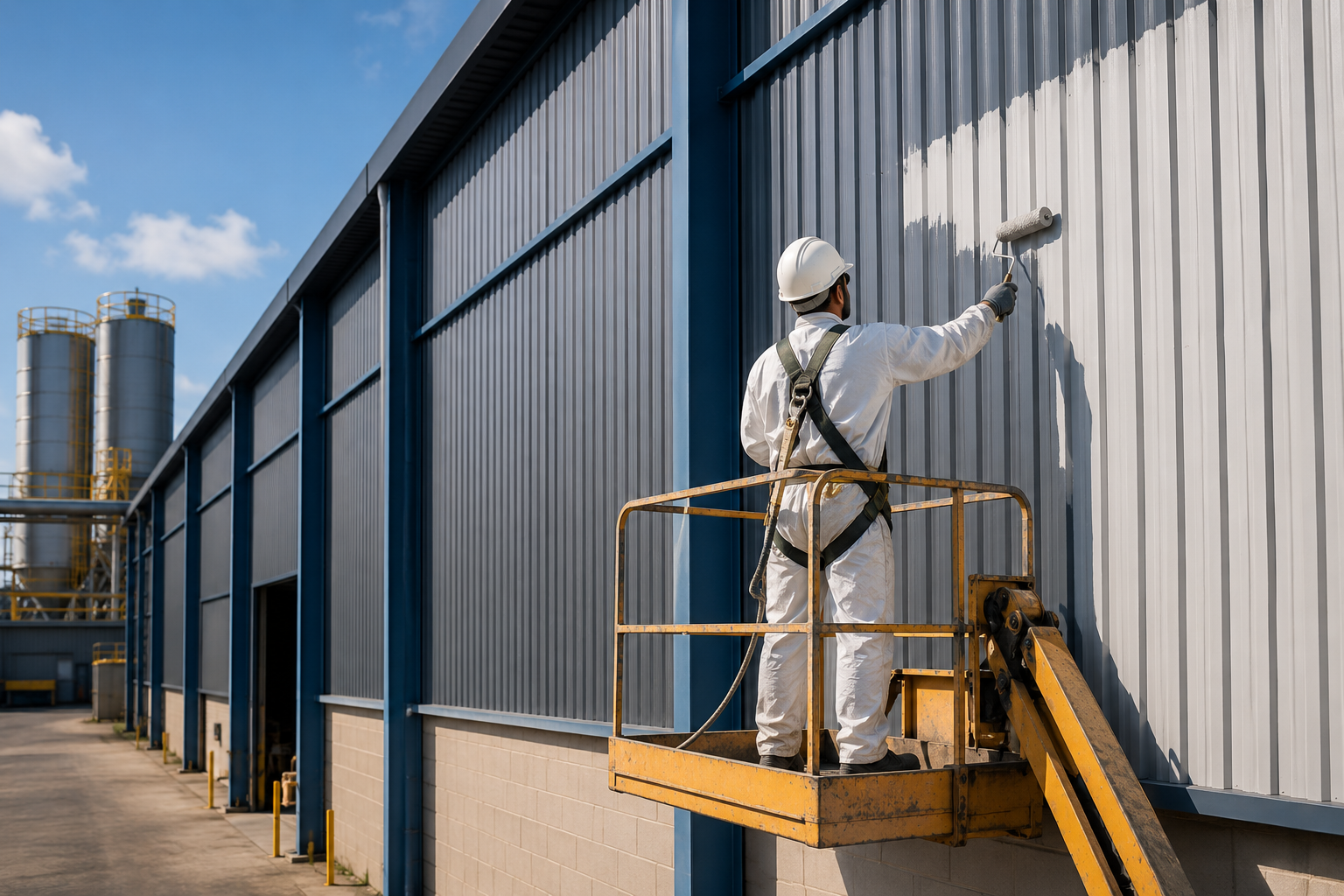
Industrial Repainting usually starts long before a building looks run down.
On most industrial sites, coatings fail slowly. A small rust stain appears around a steel connection. Paint starts chalking on an external wall. Forklift traffic wears through floor coatings near loading bays. None of those problems look expensive at first. Leave them for another year, though, and you’re often dealing with corrosion, larger repairs and longer shutdowns instead of a straightforward repaint.
Industrial Repainting is best treated as planned maintenance, not a reaction to visible damage.
Why Industrial Repainting Should Be Planned Instead of Delayed
Industrial assets rarely fail overnight.
A warehouse may have roller door frames that collect moisture every morning. A manufacturing plant might have steel exposed to heat, cleaning chemicals or condensation every day. External structures near the coast are constantly dealing with salt carried in the air. Every one of those conditions slowly breaks down the coating that’s protecting the surface underneath.
Small areas of coating failure around roof steel, handrails and loading dock canopies can quickly become much larger repairs if moisture is allowed to sit beneath the coating for long periods.
Fixing those areas early is usually straightforward.
Waiting until corrosion spreads underneath the coating rarely is.
Good industrial repainting services focus on finding those early signs before they become expensive structural maintenance.
If you would like to understand how protective coating systems work, read our guide to Industrial Painting and Coatings for Steel Infrastructure. You can also learn more about Corrosion Protection Coatings for Industrial Assets.
Signs Your Industrial Asset Needs Repainting
Most industrial sites give you plenty of warning before coatings completely fail.
One of the first signs is chalking. The surface starts feeling powdery and the colour begins fading. It often happens on walls, external cladding and exposed steel after years of weather exposure.
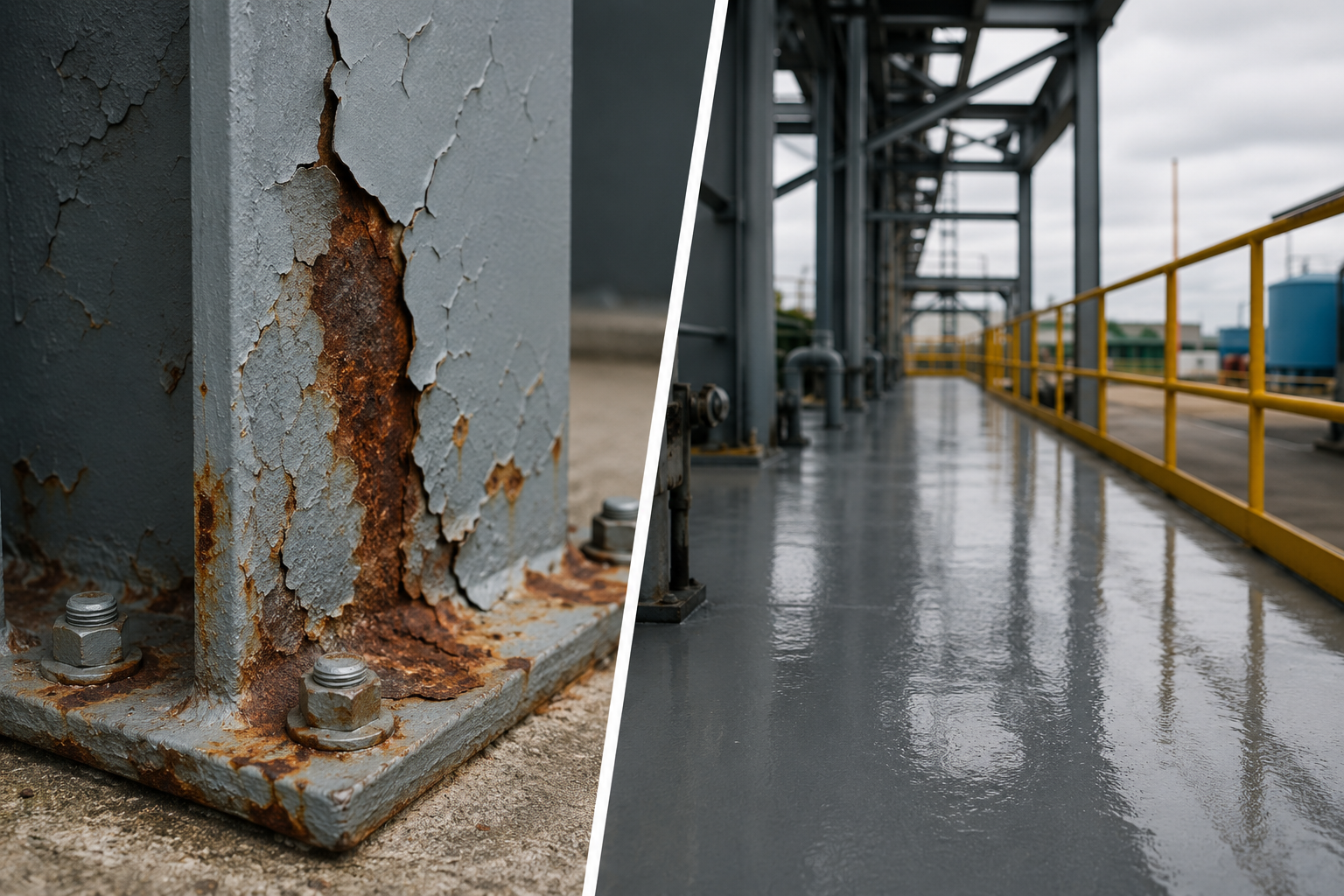
Peeling and cracking usually follow. Once the coating opens up, moisture can reach the steel or concrete underneath. That is when corrosion, staining and substrate damage begin.
Rust staining is another warning that shouldn’t be ignored. Rust staining often first appears around structural steel, staircases, roof access platforms and handrails. The stain itself might only be a few centimetres wide, but once the coating has lifted there is often much more corrosion hidden underneath.
Heavy traffic areas tell a similar story.
A warehouse running forklifts across the same routes every day will wear coatings much faster than a low traffic storage facility. Loading docks, bollards, floor markings, door frames and machinery zones often show wear first because they take the most abuse.
If you’re repairing the same locations every year, it is usually worth asking experienced industrial repainting contractors whether a broader repaint would deliver better long term value. Our article on Factory Painting in Sydney: What to Know Before You Book a Contractor explains what to look for before planning industrial maintenance work.
How Often Should Industrial Assets Be Repainted?
There isn’t a repainting schedule that suits every building.
A protected internal warehouse wall may perform well for many years. An external steel structure exposed to coastal weather may need attention much sooner. Plant rooms with heat, moisture or chemical exposure also age differently to office areas or storage facilities.
Coating life depends far more on the environment than the calendar. A coating exposed to salt air, heavy traffic or chemical cleaning may deteriorate much sooner than one in a protected internal area. Others continue performing well for many years.
That is why age alone is never the deciding factor.
Industrial assets should be inspected regularly, particularly areas exposed to weather, heavy traffic or harsh operating conditions.
Pay close attention to loading docks, roof structures, steel supports, external staircases, safety barriers, warehouse floors, chemical storage areas and plant rooms. Those locations usually show deterioration before the rest of the site.
A planned inspection gives you time to schedule work before the coating system reaches the point of failure.
Different Industrial Sites Need Different Repainting Strategies
Every facility wears differently.
Warehouse repainting contractors deal with constant vehicle movement, impact damage and floor wear. Keeping coatings performing in those environments is about durability as much as appearance.
Plant repainting services often involve equipment that operates around the clock, restricted shutdown windows and exposure to moisture, chemicals or heat. Coating selection and preparation become just as important as the application itself.
Heavy industrial painting contractors also need to understand surface preparation. Steel affected by corrosion needs a different approach to painted concrete or rendered walls. Simply applying another coat over a failed coating rarely solves the underlying problem.
Infrastructure repainting contractors face another challenge again. Bridges, public assets, large commercial structures and transport facilities all require careful planning around access, public safety and staging so work can be completed without creating unnecessary disruption.
If you’re planning broader maintenance works, our guide to Industrial Painting Sydney: Processes, Benefits & Applications explains how industrial coating projects are typically delivered.
Surface Preparation Makes the Difference
One of the most common mistakes during maintenance is applying a new coat over a failed coating without addressing the underlying cause.
It might improve the appearance for a short time, but it doesn’t solve the problem underneath.
If moisture has lifted the coating, if corrosion has started or if contaminants remain on the surface, those issues need to be dealt with before any new coating is applied.
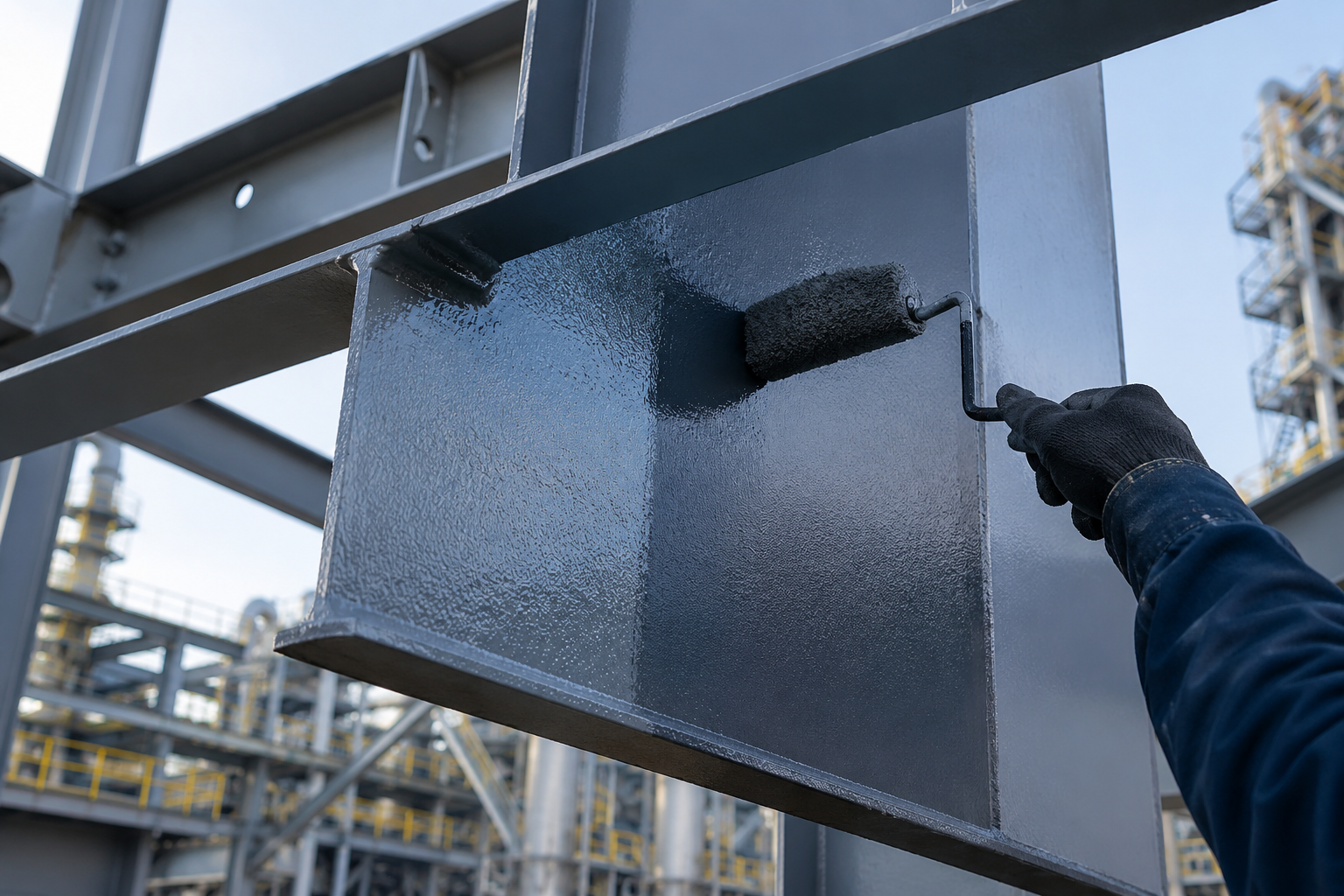
Preparation may involve pressure cleaning, mechanical abrasion, rust removal, repairs, priming or applying a protective coating system designed for the environment.
The preparation is what determines how long the repaint will last.
If corrosion is already present, our guide to Corrosion Protection Coatings explains why treating the problem early saves significant maintenance costs later.
Where industrial flooring is involved, selecting the right coating system is equally important. Our article on How to Choose the Best Epoxy Flooring Contractor explains what to look for. You can also learn more about Epoxy Coating Services.
Repainting Around Live Operations
Industrial sites don’t stop operating because repainting has been scheduled.
So, planning matters just as much as painting.
Industrial repainting Sydney projects often have to work around production schedules, shift changes, deliveries, access restrictions and occupied work areas. The same applies across industrial repainting NSW, where many facilities operate continuously and shutdown windows are limited.
Before work begins, experienced contractors should already know how equipment will access the site, which areas can remain operational, how pedestrians and vehicles will be separated from work zones and how drying times will affect the schedule.
That planning helps businesses continue operating while maintenance is completed safely.
If minimising downtime is a priority, read our guide to Office Painting Services: Minimising Business Downtime.
You can also view examples of completed commercial and industrial projects on our What We Have Done page.
Repair, Recoat or Fully Repaint?
Not every defect requires a complete repaint.
A damaged bollard, an isolated impact mark or a single section of worn wall coating may only require a local repair.
The decision changes once the same defects keep returning.
If corrosion is appearing in several locations, coatings are losing adhesion across large areas or maintenance crews are repeatedly patching the same surfaces, a staged repaint often becomes the more economical solution.
Many industrial facilities schedule repainting over several stages. Higher risk areas are completed first while lower priority sections are programmed into future maintenance works. That approach helps control budgets without allowing coating systems to deteriorate further.
You can also read our related article on Industrial Repainting: When Facilities Should Recoat Structures.
What Happens When Repainting Is Left Too Long?
Delayed maintenance nearly always costs more.
Once corrosion spreads beneath the coating, preparation becomes more extensive. Areas that once needed cleaning and repainting may now require rust removal, repairs or replacement of damaged components before coatings can even be applied.
This often happens on warehouse steel, roof structures, loading dock canopies and external staircases. What starts as a relatively small repair can become a much larger maintenance project if early signs of coating failure are ignored.
Planning repainting work before coatings fail completely is usually the more practical option.
Choosing the Right Contractor
Anyone can apply paint.
The difference is knowing how to prepare the surface properly, choose the right coating system and complete the work without disrupting the people using the site.
Experienced industrial repainting contractors understand how different environments affect coating performance. They understand how to work safely around warehouses, manufacturing facilities, commercial buildings and operating industrial sites. They also know when a simple repair is appropriate and when a larger repaint will save money over the life of the asset.
If you’re comparing providers, our articles on How to Choose the Right Commercial Painter in Sydney and Key Considerations to Choose the Right Commercial Painter provide practical advice.
You can also learn more about Commercial Painting Services, What We Do, and About Horizon Coatings.
Speak With Horizon Coatings About Industrial Repainting
Industrial coatings rarely fail without warning.
If you’re seeing faded surfaces, peeling paint, rust staining, worn traffic areas or repeated maintenance repairs, now is the right time to inspect the asset before the work becomes more extensive.
Horizon Coatings provides Industrial Repainting for warehouses, factories, processing plants, infrastructure assets and commercial facilities. We work with property owners, facility managers, builders and asset managers to plan repainting around operational requirements while protecting the long term condition of their buildings.
If you’d like to discuss Industrial Repainting or arrange a site inspection across Sydney, Melbourne, Brisbane or Canberra, contact Horizon Coatings today. You can also browse more industry insights on our Blog.
Frequently Asked Questions
How do I know when an industrial building needs repainting?
The first signs are usually fading, chalking, peeling paint, rust staining or worn areas around loading docks, walkways and high traffic zones. If you’re noticing recurring repairs or coating failures, it’s worth arranging an inspection before the damage becomes more extensive.
How often should industrial assets be repainted?
There is no fixed schedule because every facility operates in different conditions. Warehouses, factories and plants exposed to moisture, chemicals, heavy traffic or coastal environments generally require more frequent inspections than low exposure buildings. A regular maintenance inspection is the best way to determine when repainting is needed.
Can industrial repainting be completed while our facility is operating?
Yes. Most industrial repainting projects can be planned around normal operations. Experienced contractors schedule work in stages, around shift changes, shutdown periods or restricted access areas to minimise disruption while maintaining a safe work environment.
What is the difference between industrial repainting and industrial painting?
Industrial painting usually refers to coating new assets or newly constructed facilities. Industrial repainting involves maintaining, repairing or replacing existing coating systems on older buildings, steel structures, warehouses, factories and infrastructure to extend their service life.
Is it better to repair damaged areas or repaint the entire asset?
It depends on the condition of the existing coating. Small isolated defects can often be repaired, but if coating failure is widespread or corrosion is appearing in multiple areas, a planned repaint is often the more cost effective long term solution.
What surfaces can be included in an industrial repainting project?
Industrial repainting can include structural steel, warehouses, factories, manufacturing plants, concrete walls, external cladding, loading docks, handrails, staircases, plant rooms, machinery surrounds, protective coatings and industrial flooring systems.
Why should I use a specialist industrial repainting contractor?
Industrial environments place different demands on coatings than standard commercial buildings. Specialist industrial repainting contractors understand surface preparation, protective coating systems, access requirements, safety procedures and how to complete projects while keeping facilities operating with minimal disruption.