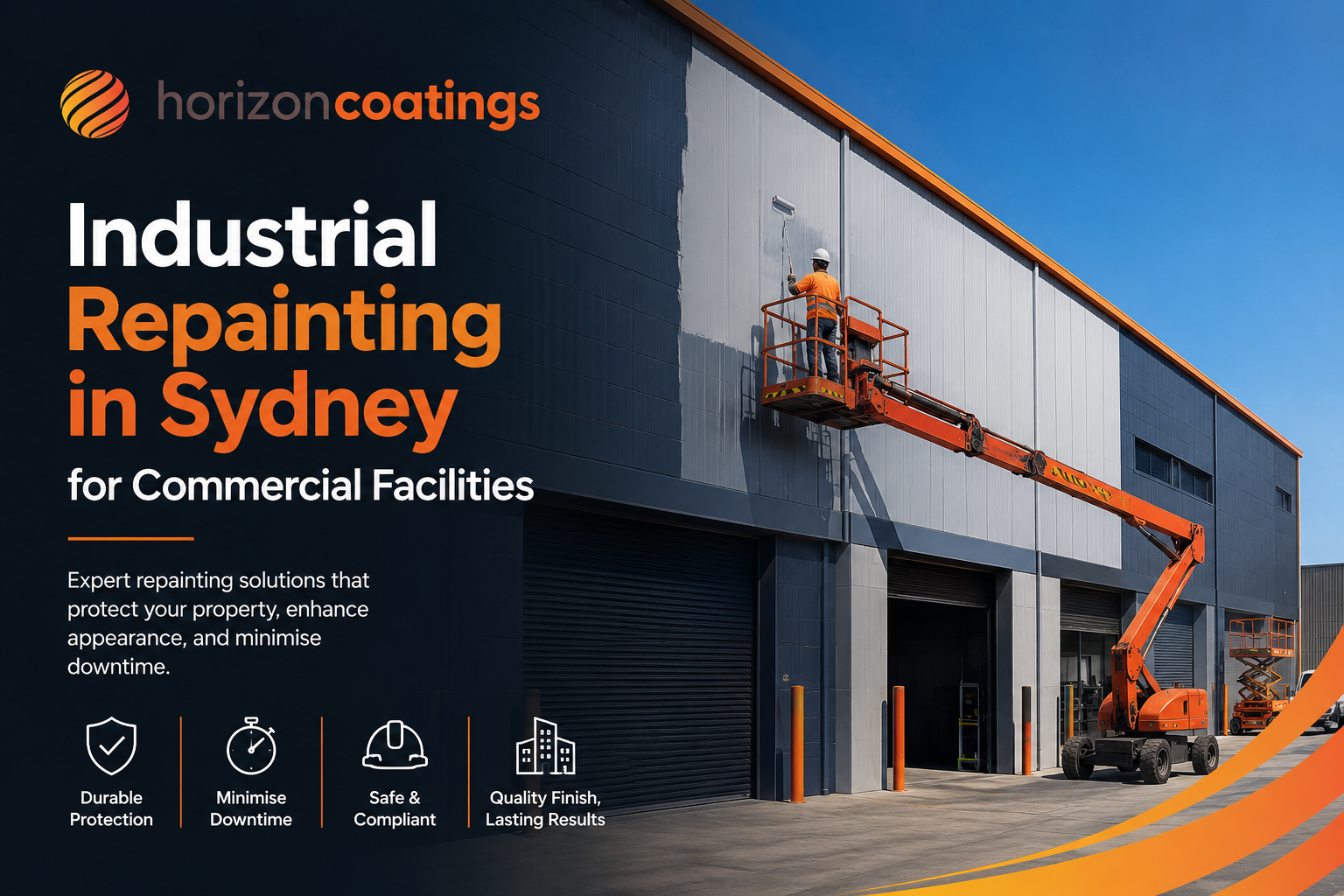
Most industrial repainting jobs start long before anyone decides to repaint the building.
A warehouse manager notices rust stains running down steel columns near the loading dock. Someone in maintenance keeps patching the same peeling section every few months. Forklift traffic starts grinding through the floor coating near dispatch. Water gets under an old roof coating and suddenly the ceiling below starts showing stains after heavy rain.
That is usually when businesses start looking into Industrial Repainting in Sydney.
The mistake is waiting until the damage becomes obvious.
By the time coatings are visibly failing across a facility, the structure underneath has often already been exposed to moisture, corrosion or wear for years. What could have been a straightforward repainting project becomes concrete repairs, steel replacement, shutdown planning and far larger costs.
For facility managers and property owners, repainting is not really about appearance. It is about protecting the building before small issues become operational problems.
Why Industrial Buildings Need Repainting Sooner Than Most People Think
Industrial environments are hard on coatings.
In Sydney alone, you have facilities dealing with UV exposure, coastal moisture, heavy traffic, rain, cleaning chemicals, forklifts and constant operational wear. A warehouse near Port Botany ages differently to an internal manufacturing facility in Western Sydney. The coating system needs to reflect that.
You also see problems caused by poor preparation from previous works.
Sometimes the original coating was applied over contaminated surfaces. Sometimes the wrong product was selected. Other times the coating simply reached the end of its service life and nobody acted early enough.
That is common on:
- Warehouses with constant forklift traffic
- Manufacturing facilities exposed to heat or chemicals
- Commercial roofs under heavy sun exposure
- Coastal steel structures
- Multi level car parks with water ingress
- Distribution centres operating around the clock
A coating can still look acceptable from ground level while failing underneath. That is what catches people out.
For businesses managing steel assets and exposed structures, industrial painting and coatings for steel infrastructure becomes part of long term asset protection, not just maintenance.
Signs You Need Industrial Repainting in Sydney
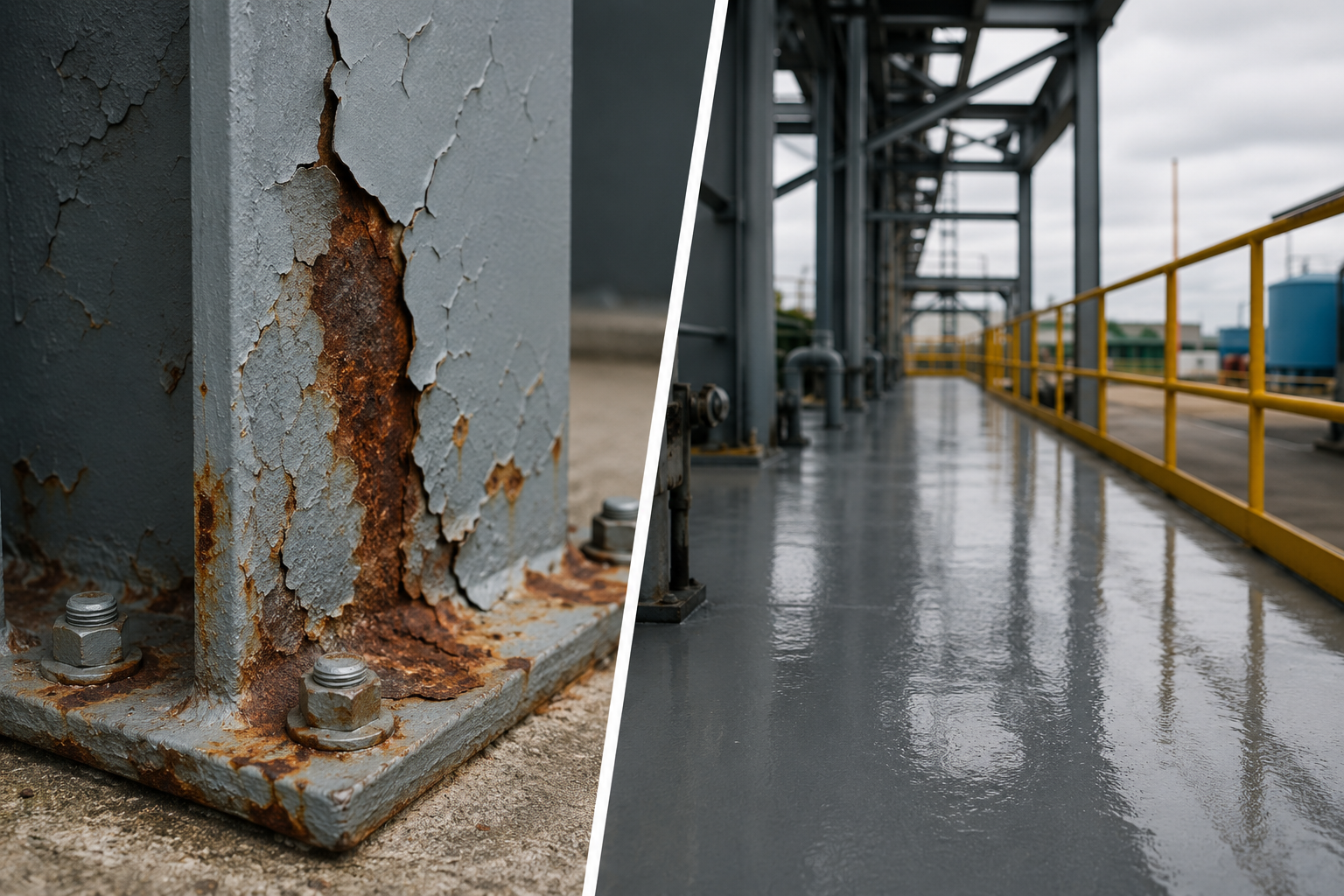
Most facilities give plenty of warning before coatings fail completely. The problem is those warning signs are usually ignored because the building still looks good enough from a distance. Rust around bolts, roof sheeting, steel beams, handrails, roller door frames or exposed structural steel is often the first thing people notice. On coastal sites around Sydney, corrosion can spread quickly once moisture gets under the coating. What starts as a few rust marks can turn into steel remediation work surprisingly fast.
Coating breakdown can also show up in quieter ways. Run your hand along an older painted surface and you may find a powdery residue. That chalking usually means the coating is breaking down from UV exposure and is no longer properly protecting the substrate underneath. Bubbling or lifting paint is another warning sign, especially around roof penetrations, concrete surfaces, poorly ventilated areas and older repainting jobs where preparation was rushed. Once moisture gets trapped beneath the surface, the coating rarely improves on its own. Businesses dealing with moisture related deterioration often also need waterproof protective paint coatings to help prevent further substrate damage.
Floors tend to tell their own story. A warehouse moving pallets twelve hours a day will destroy a light duty coating much faster than a low traffic storage facility. The damage usually starts around forklift turning areas, dispatch zones and loading docks. Once the coating wears through, cleaning becomes harder, surfaces become slippery and concrete starts taking direct impact. That is where industrial repainting contractors often recommend epoxy flooring systems designed for heavier operational use. If maintenance crews are also touching up the same walls, roofs or steelwork every few months, the facility is usually overdue for a proper repainting program. At some point, patch repairs stop saving money.
Delaying Repainting Usually Costs More
Most repainting projects are cheaper six months earlier.
If coatings are addressed while the substrate is still in good condition, the scope is normally manageable. Surface preparation, local repairs and recoating can often happen without major disruption to operations.
Leave it too long and the project changes completely.
Now you may be dealing with:
- Corroded steel
- Failed waterproofing
- Concrete repairs
- Abrasive blasting
- Full coating removal
- Access equipment across larger sections of the site
- Shutdown coordination with tenants or operations teams
That is usually where budgets start climbing quickly.
A planned industrial repainting in Sydney project is almost always less painful financially than waiting for widespread coating failure.
Industrial Repainting Is About Keeping Facilities Operational
Most commercial facilities cannot simply stop operating because repainting work needs to happen.
Warehouses still need dispatch running. Manufacturing facilities still need production moving. Retail centres still have tenants and customers onsite.
That is why planning matters just as much as the coating itself.
Good repainting work is usually the work nobody notices happening.
The project is staged properly. Access is planned properly. Communication is clear. High traffic areas are managed around operational hours where possible.
For some facilities, the coating system is directly tied to safety as well.
A worn warehouse floor can become slippery. Exposed steel can deteriorate faster than expected. Poorly maintained surfaces become harder to clean and maintain.
That is why experienced industrial repainting contractors spend time understanding how the facility actually operates before recommending a system.
For occupied commercial sites, similar planning challenges are discussed in commercial interior painting on live sites, where operational continuity matters just as much as the finish itself.
What a Proper Industrial Repainting Project Looks Like
Every repainting project is different, but the good ones usually start with a proper look at the site before anyone talks about colours or finish. The first step is understanding what has actually failed. That means checking moisture exposure, corrosion levels, substrate condition, coating compatibility and operational constraints across the facility. Sometimes an inspection shows the coating still has years left in it. Other times the surface looks acceptable from ground level while corrosion is already spreading underneath joins and penetrations.
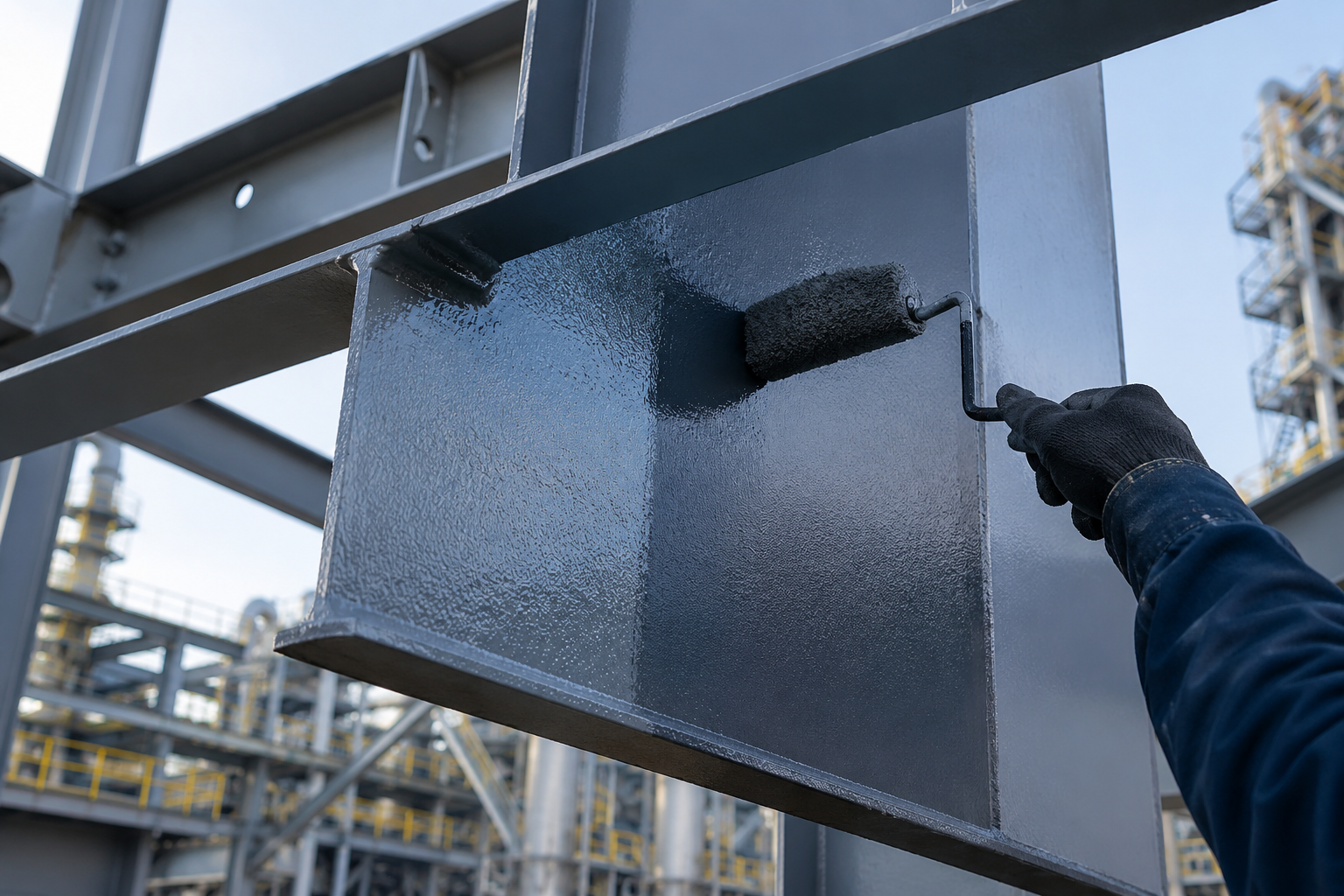
From there, preparation becomes the main difference between a repaint that lasts and one that fails early. Depending on the structure, preparation may involve pressure cleaning, grinding or rust treatment. Some sites require abrasive blasting or full removal of failed coatings. Shortcuts during preparation usually become expensive later because the new system is only as good as the surface it is applied to.
The coating system also needs to match the site. A logistics warehouse does not need the same coating system as a coastal steel structure or a food production facility. Traffic levels, moisture, chemicals, cleaning requirements and exposure conditions all matter. That is why coating selection should be based on how the building actually operates, not simply what was used last time.
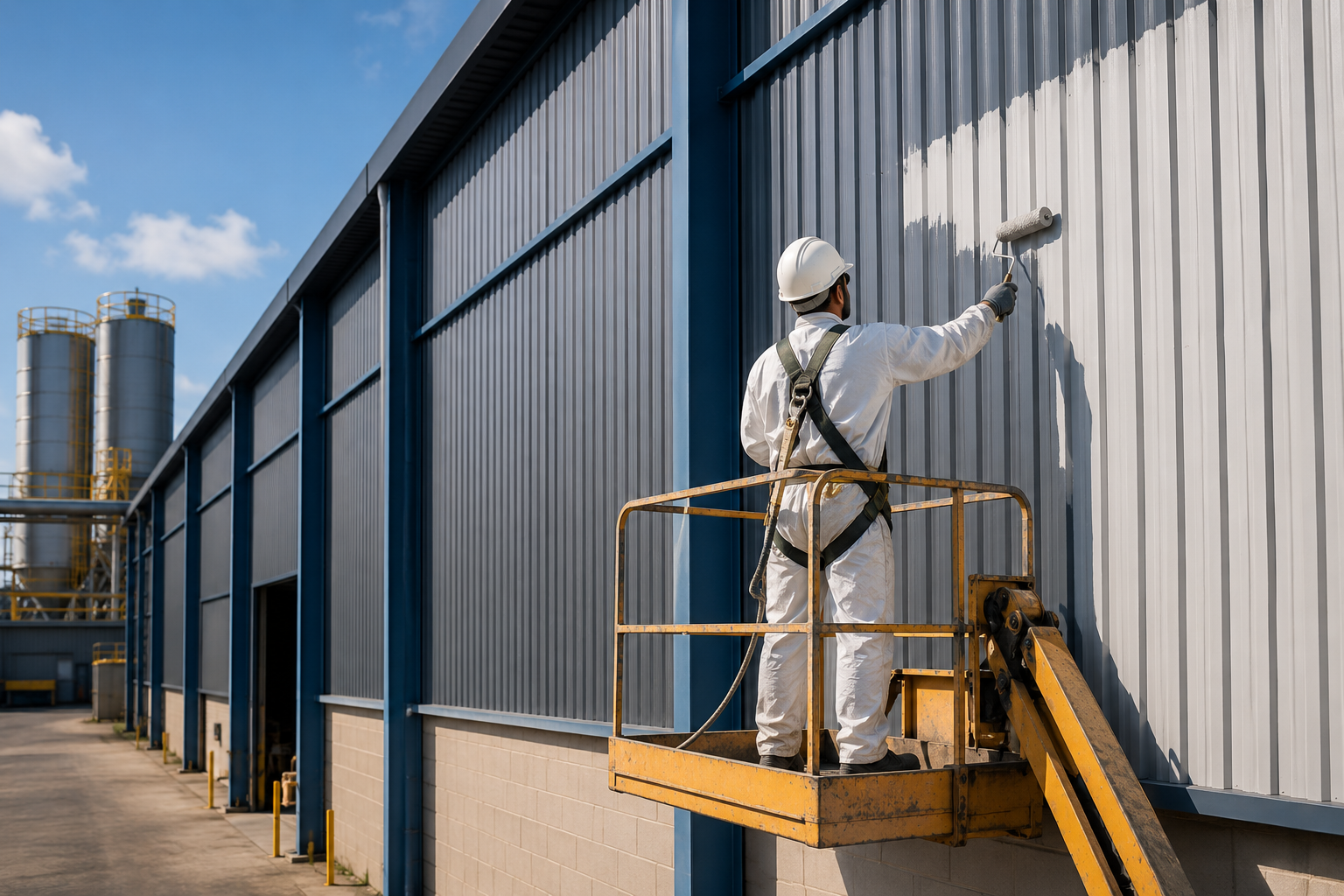
Planning the work around operations is just as important. Most industrial sites are active environments, so repainting often needs to happen around staff, equipment, deliveries, tenants or operating hours. Staging and communication become a big part of keeping projects moving without unnecessary disruption. That matters on commercial repainting projects across Sydney where downtime can quickly become expensive. The NSW Government also outlines broader workplace maintenance and safety responsibilities for commercial facilities through SafeWork NSW.
Choosing the Right Industrial Repainting Contractors
Industrial repainting is not general painting work on a larger scale.
The planning is different. The safety requirements are different. The operational pressure is different.
You want contractors who understand live environments and know how to manage access, safety systems, scheduling and communication properly.
At Horizon Coatings, projects are delivered across warehouses, commercial buildings, infrastructure, retail facilities and industrial sites throughout NSW, Queensland, Victoria and the ACT. The business works with facility managers, builders, property owners and operations teams on repainting, protective coatings, maintenance programs and epoxy flooring systems built around long term asset protection.
Businesses comparing providers can also review this guide on how to choose the right commercial painter in Sydney before planning major repainting works.
The focus is straightforward. Deliver quality work, communicate properly and minimise disruption while the project is underway.
Industrial Repainting in Sydney Should Be Planned Before Coatings Fail
The best time to assess a facility is before the damage becomes obvious.
Once corrosion spreads through steel, moisture gets into concrete or coatings start failing across large sections of a building, the project usually becomes more disruptive and far more expensive than it needed to be.
A proper inspection gives you a realistic picture of the condition of the facility and whether the coatings are still doing their job.
Horizon Coatings works with commercial property owners, facility managers and industrial operators across Sydney on industrial painting and coating projects, protective coatings and long term maintenance programs.
If your facility is starting to show signs of coating wear, rust, bubbling paint or floor coating failure, now is the time to assess it before the scope grows into a much larger repair project.