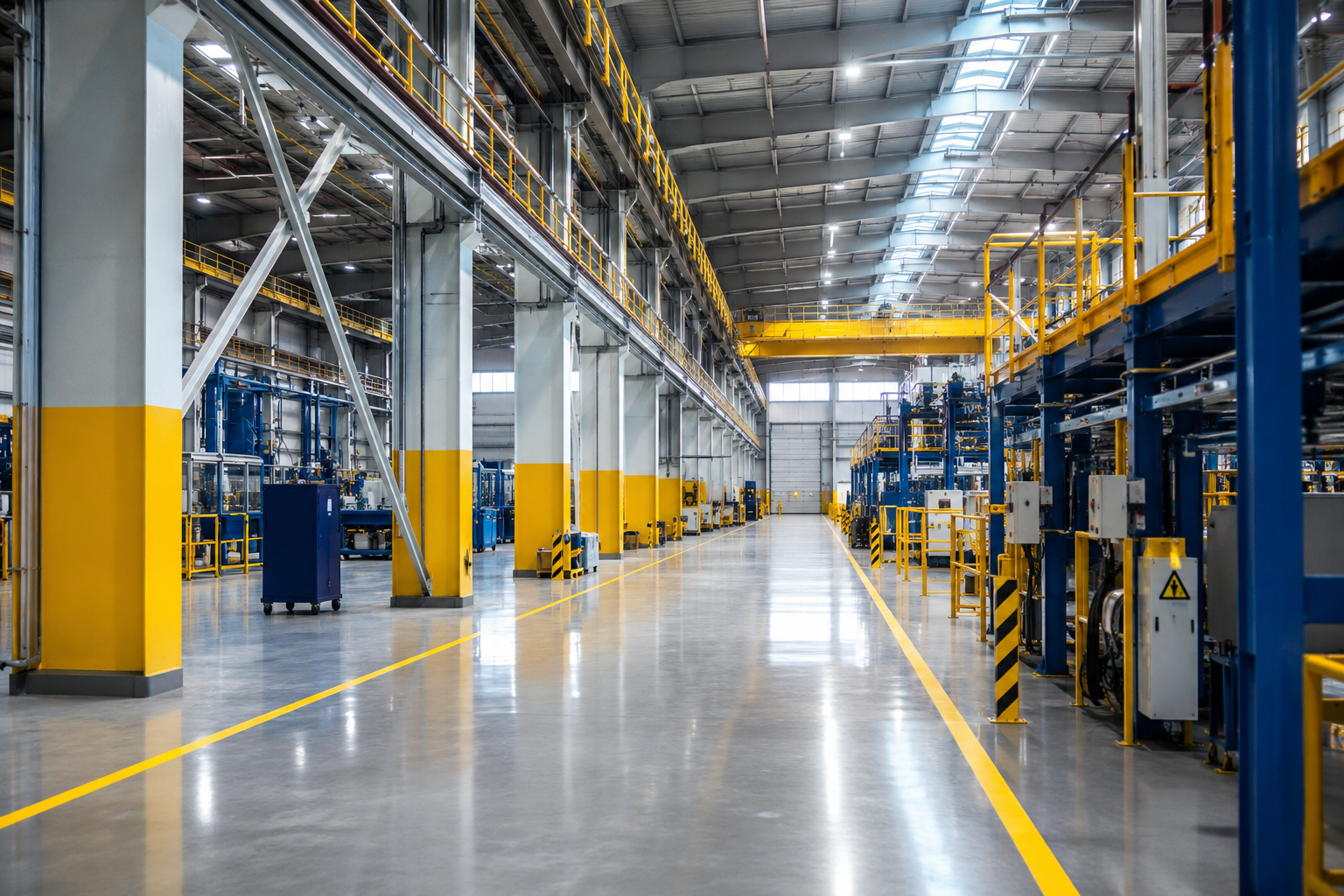
Production targets don’t stop because a factory needs repainting.
Most factories can’t afford to shut the doors for a week while painters work their way through the building. Orders still need to go out. Forklifts keep moving. Staff stay on the floor. That’s why Factory Repainting is planned around your operation, not around the painting contractor. The right contractor works with your maintenance team, schedules the work in stages and keeps disruption to a minimum while protecting the building for years to come.
Factory Repainting begins with understanding how your site operates
Before anyone talks about paint, they should understand how your factory works.
A food processing facility running around the clock has different requirements from a steel fabrication workshop that closes every weekend. A distribution warehouse has different access issues from a manufacturing plant with overhead cranes and restricted production zones.
Good factory repainting contractors spend time walking the site before preparing a proposal. They look at traffic flow, loading areas, production schedules, access equipment, safety requirements and the condition of existing coatings. Those conversations usually determine how the project will be staged long before the first painter arrives.
Sometimes external work can be completed while production continues inside. Other times, internal areas are completed over weekends, after hours or during scheduled maintenance periods.
If you’re preparing for a larger repaint, our guide to Factory Painting in Sydney explains what to consider before selecting a contractor.
Downtime usually costs more than the repaint itself
The painting invoice is easy to budget for.
Lost production isn’t.
One delayed production run can affect deliveries, staff scheduling and customer commitments. Experienced industrial repainting contractors spend just as much time planning the project as they do completing the work.
One loading dock may remain operational while another is repainted. In larger facilities, production can often continue in one section while repainting progresses through another. Careful staging makes that possible. Small decisions like these help businesses keep operating instead of bringing everything to a stop.
For most facilities, repainting should feel like another scheduled maintenance activity, not a major interruption.
Planning industrial repainting around production
We rarely repaint an entire factory at once.
Breaking the project into manageable stages usually produces a better result for everyone involved. It also allows production, maintenance and deliveries to continue wherever possible.
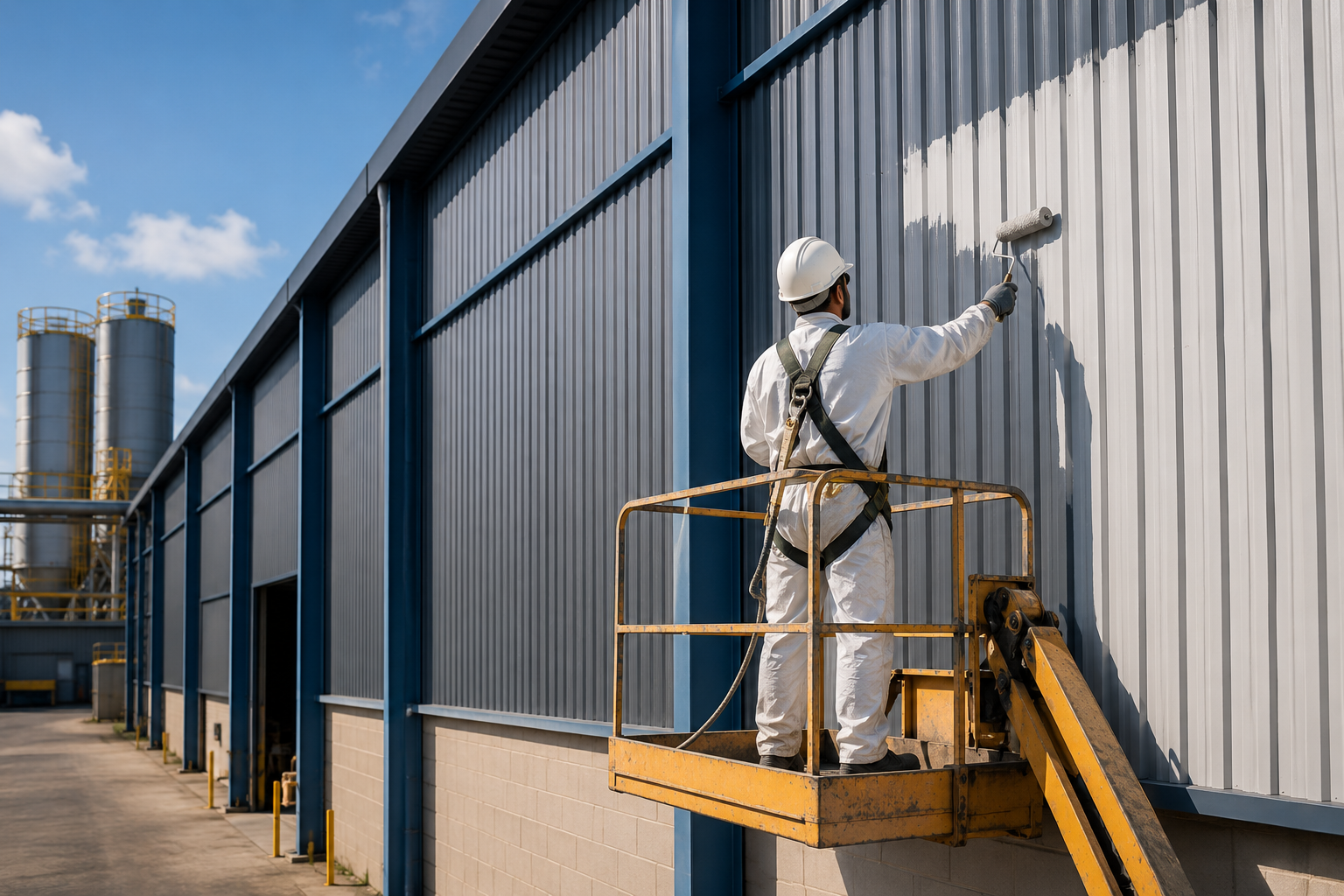
A typical industrial repainting project may involve completing external walls first, followed by loading areas during quieter periods, then internal work over weekends or planned shutdowns. High level steelwork may be scheduled during maintenance windows when elevated work platforms can operate safely without interfering with production below.
Every site is different, but the thinking stays the same. Fit the repaint around the business, not the business around the repaint.
Our article on Industrial Repainting explains why planning maintenance before coatings fail often saves both time and money.
Surface preparation decides how long the coating lasts
Most coating failures don’t happen because the paint was poor.
They happen because the surface underneath wasn’t ready.
Factories collect grease, dust, moisture and chemical residue over many years of operation. If those contaminants remain on the surface, new coatings struggle to bond properly.
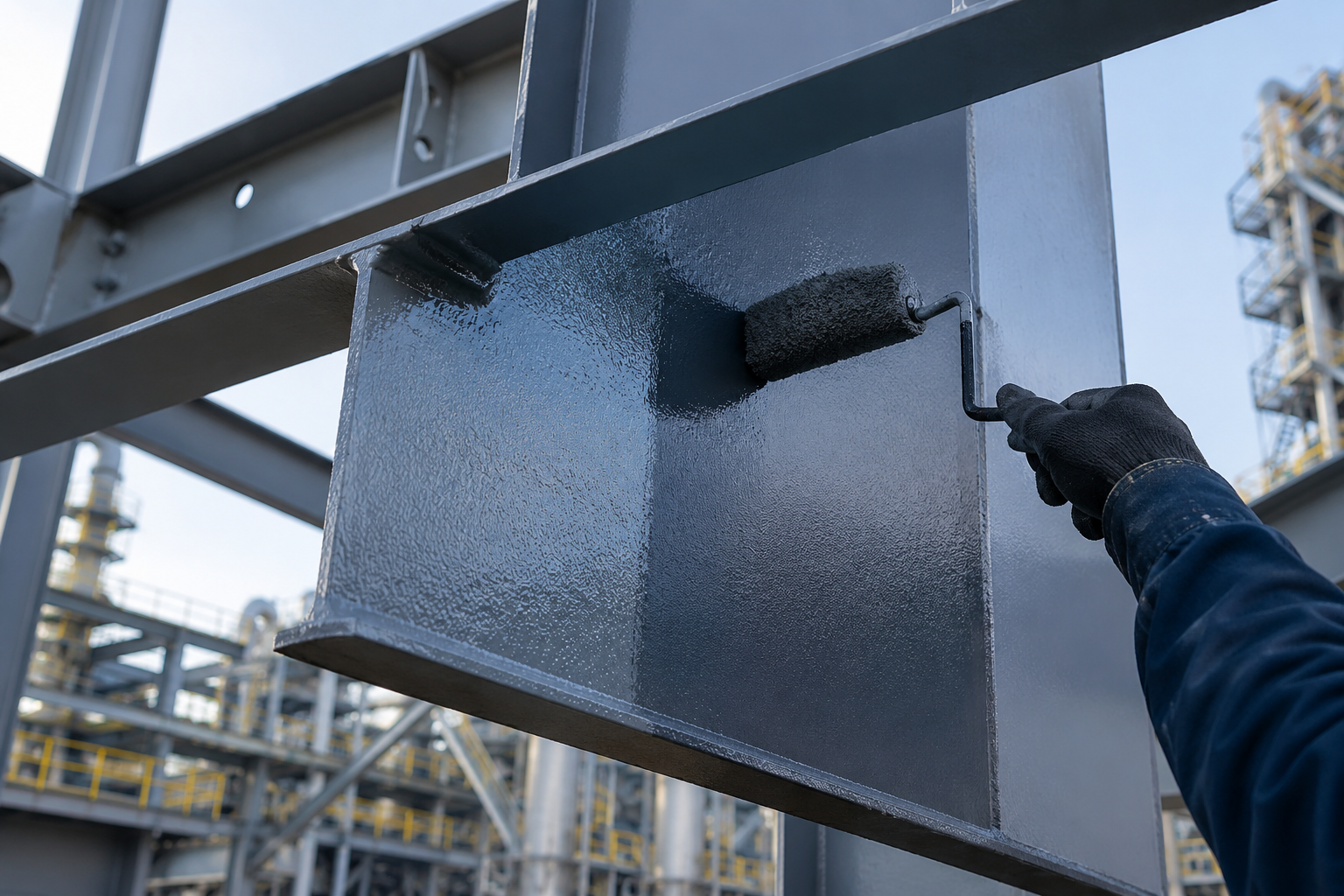
Preparation might involve pressure cleaning, degreasing, abrasive blasting, mechanical sanding or repairing damaged substrates before painting begins.
Coating systems can fail much earlier than expected if oil contamination is left on structural steel before repainting begins. Repairing the failed coating usually costs far more than preparing the surface properly the first time. The repair ends up costing far more than doing the preparation properly the first time.
The coating system needs to suit the factory
There’s no single coating system that suits every facility.
A food manufacturing plant has very different requirements from a recycling facility. A warehouse storing packaged goods faces different conditions from a chemical processing plant or engineering workshop.
Experienced industrial painting contractors select coating systems based on how the building is actually used. Moisture exposure, cleaning chemicals, abrasion, forklift traffic, heat and corrosion all influence the recommendation.
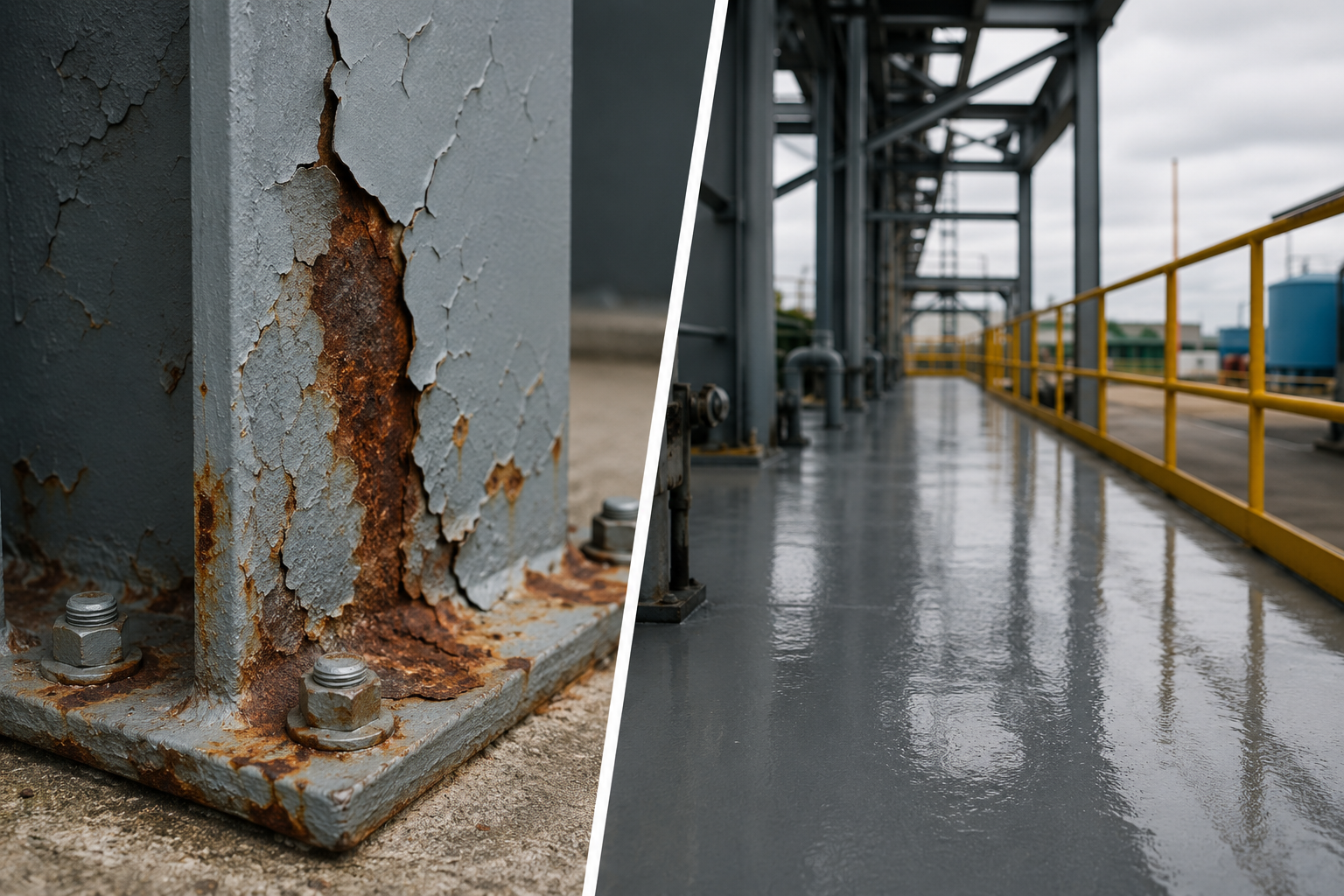
If corrosion has already started appearing on structural steel or exposed assets, our article on Corrosion Protection Coatings explains why repairing it early usually keeps the project much smaller.
Shutdown painting contractors make maintenance windows count
Some repainting projects simply can’t happen while production is running.
Large structural repairs, confined spaces and high risk work often need to be completed during scheduled shutdowns.
Good shutdown painting contractors arrive ready to work.
By the time the shutdown begins, access equipment, materials, safety documentation and labour should already be organised. Every hour available for maintenance is valuable, so planning ahead allows the work to begin immediately instead of losing time waiting for deliveries or equipment.
Industrial maintenance painting prevents larger repairs
Waiting until paint is peeling usually means you’ve waited too long.
Small coating failures allow moisture to reach the surface underneath. Over time that can lead to corrosion, concrete deterioration or larger repair programs that are far more expensive than routine maintenance.
Planned industrial maintenance painting allows facilities to repair isolated areas before those problems spread. Many businesses include repainting as part of their regular maintenance program because it’s easier to budget for smaller scheduled works than unexpected structural repairs.
Plant repainting services often include flooring upgrades
Walls and steelwork aren’t the only surfaces that wear out.
Concrete floors also deteriorate under constant forklift traffic, machinery and heavy use.
Many facilities combine repainting with plant repainting services that include epoxy flooring or protective floor coatings. Completing both at the same time often reduces future maintenance disruptions because contractors only need to mobilise once.
If you’re considering floor upgrades, our guide to choosing the right epoxy flooring contractor explains what to look for before making a decision.
Experience makes all the difference on live industrial sites
Painting an operating factory is very different from painting an empty building.
You’re working around production staff, forklifts, deliveries, machinery and maintenance teams, all while meeting safety requirements and keeping the project moving.
The quality of the planning often determines how smoothly the repaint runs. Horizon Coatings works with commercial and industrial facilities throughout New South Wales, Queensland, Victoria and the Australian Capital Territory. We plan every project around the way our customers operate, communicate throughout the job and deliver the work we said we would.
If your facility is due for Factory Repainting, or you’re planning industrial repainting as part of your next maintenance program, our team can help you develop a practical staging plan that protects your assets while keeping your business operating. To arrange a site inspection or discuss your project, visit our Contact Us page or learn more about our commercial painting services.
Frequently Asked Questions
How long does factory repainting usually take?
The timeframe depends on the size of the facility, the condition of the existing coatings and whether the work is completed in stages or during a shutdown. Many projects can be planned around production schedules so work is completed over several weeks with minimal disruption rather than requiring a full facility closure.
Can factory repainting be completed while production continues?
In many cases, yes. Factory repainting can often be staged so different sections of the facility are completed at different times. External areas, loading docks and non production spaces may be painted while manufacturing continues elsewhere, provided safety requirements and site conditions allow it.
When should a factory be repainted?
Signs that repainting should be considered include peeling coatings, corrosion, fading, rust staining, concrete deterioration and surfaces that are becoming difficult to clean. Addressing these issues early usually prevents larger and more expensive repairs later.
What type of paint is used for factory repainting?
The coating system depends on the environment. Factors such as chemical exposure, moisture, abrasion, heat and heavy traffic all influence product selection. Industrial facilities often require protective coating systems that provide long term durability rather than standard commercial paints.
How do industrial painting contractors minimise disruption?
Experienced industrial painting contractors work closely with site managers to plan access, schedule work around production, isolate work areas and coordinate with maintenance activities. Careful planning allows many projects to proceed while the facility remains operational.
Should factory floors be repainted at the same time?
Many businesses choose to complete floor coating upgrades during the same maintenance program. Combining factory repainting with epoxy flooring or other protective floor coatings can reduce future disruption by completing multiple maintenance tasks during one planned project.
How do I choose the right factory repainting contractor?
Look for contractors with experience working on live industrial sites, a strong focus on safety, clear communication and the ability to stage projects around operational requirements. They should also recommend coating systems based on your facility’s environment rather than offering the same solution for every project.