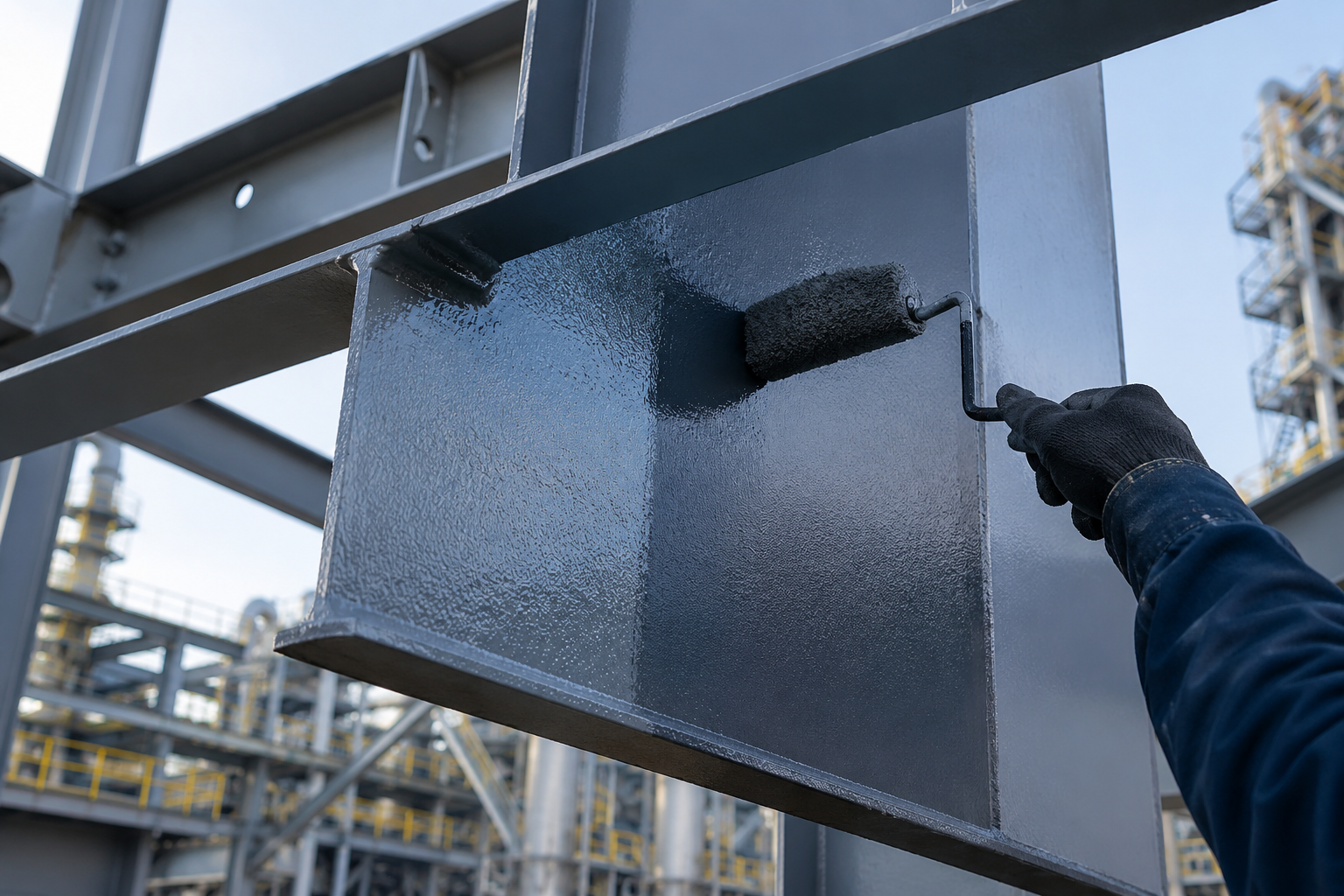
Steel is built to last, but it doesn’t protect itself.
Across warehouses, factories, processing plants, transport facilities and commercial buildings, exposed steel is under constant attack from moisture, salt, chemicals and everyday wear. Once a coating breaks down, corrosion starts quietly. By the time rust becomes obvious, the damage underneath is often much worse than it looks.
Choosing the right Steel Protective Coatings isn’t simply about selecting a product. It’s about protecting the asset for the long term. The coating system you apply today can determine whether a structure needs minor maintenance in ten years or major repairs much sooner. The right decision starts with understanding the environment, the condition of the steel and how the asset is used every day.
Why Steel Protective Coatings Are Different on Every Project
No two industrial sites age the same way.
A warehouse near Port Botany deals with salt carried inland by coastal winds. A food processing facility may wash equipment and structural steel several times a day. Manufacturing plants often expose steel to cleaning chemicals, steam and constant humidity. Distribution centres create different problems again, with regular forklift movement damaging columns, bollards and protective barriers.
These conditions all affect how quickly coatings deteriorate.
The environment should always determine the coating system, not the fact that the same product performed well on another project.
If you’re trying to extend the life of industrial assets, understanding how corrosion develops is a good place to start. Our guide on Corrosion Protection Coatings explains what happens beneath the surface.
Choosing the Right Industrial Protective Coatings
Before anyone recommends a coating, they need to understand what that steel actually does every day.
A loading dock exposed to weather has different requirements from structural steel inside a manufacturing plant. Equipment supporting chemical processing needs a different specification from steel inside a commercial office building.
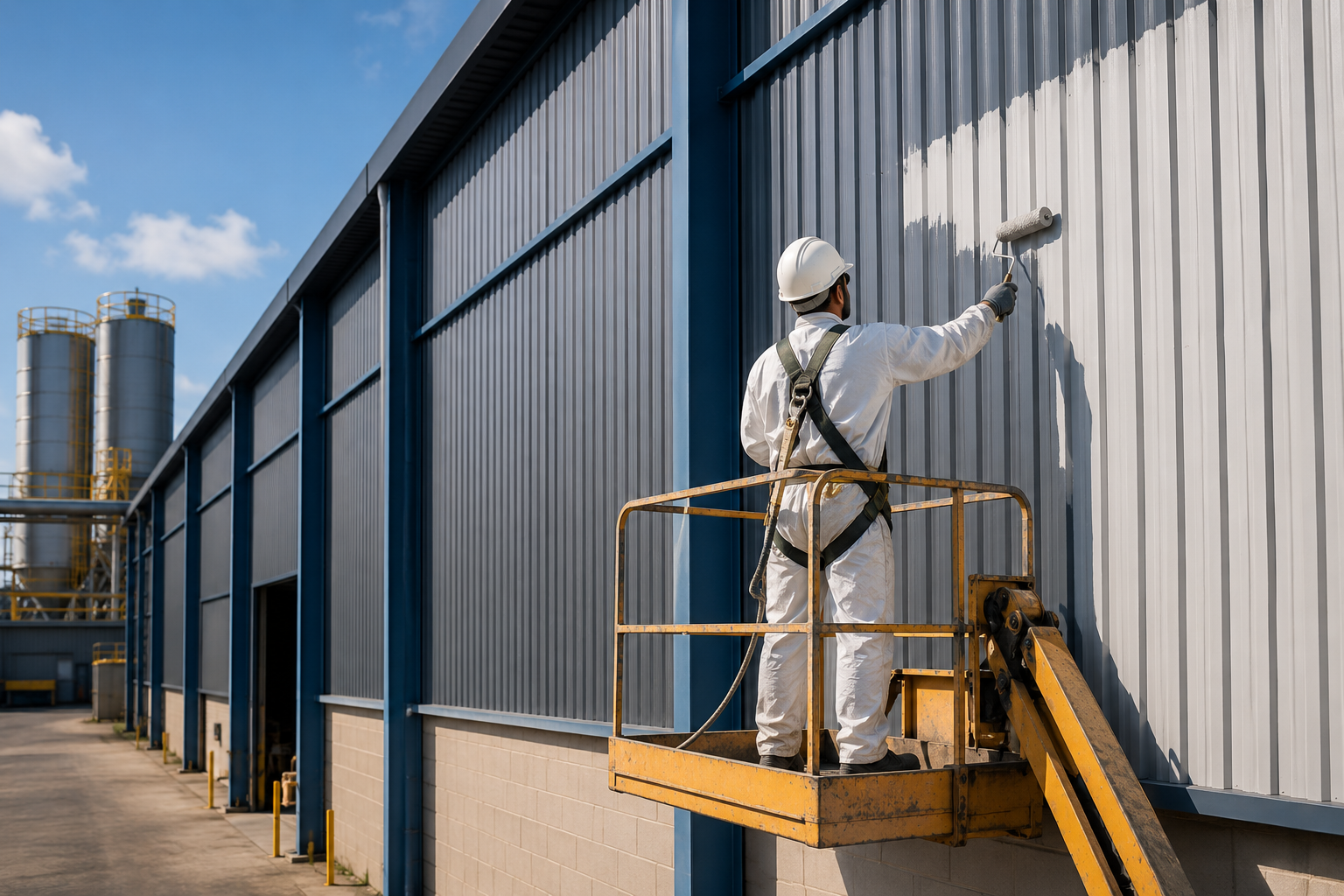
Selecting suitable industrial protective coatings usually starts with a site inspection. Contractors assess the condition of the existing coating, signs of corrosion, environmental exposure and how much downtime is available to complete the work.
The coating itself is only part of the solution. Surface preparation, product compatibility and correct application all influence how long the system performs.
Surface Preparation Decides How Long the Coating Lasts
Many coating failures have very little to do with the coating itself.
More often, the problem starts before the first coat is applied.
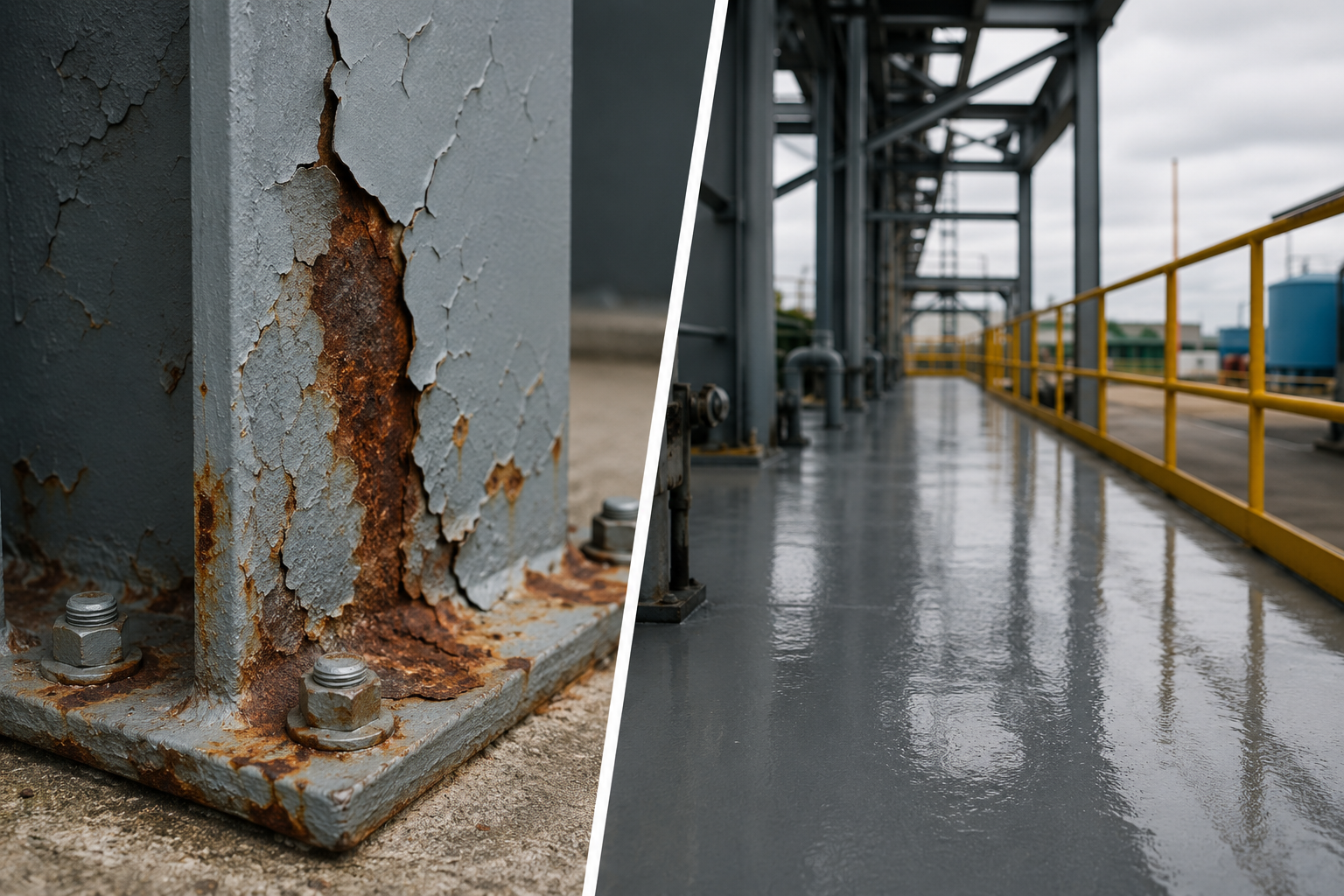
Old paint, rust, grease, contaminants and loose material prevent new coatings from bonding properly. Once moisture finds its way beneath the coating, corrosion continues underneath long before it becomes visible.
On many industrial sites, the first signs of failure appear around handrails, roof penetrations, structural connections, welds and areas regularly struck by forklifts or mobile equipment. Those locations usually need more attention than large flat surfaces because they experience greater wear.
Depending on the project, preparation may include abrasive blasting, mechanical preparation, pressure cleaning or chemical cleaning before primers and top coats are applied.
Spending more time preparing the surface usually saves far more time and money over the life of the asset.
Businesses planning larger maintenance programs may also find our article on Industrial Repainting useful.
High Performance Protective Coatings Are Designed Around the Environment
There isn’t one coating that suits every industrial facility.
Sites exposed to chemicals, coastal salt, high humidity or constant abrasion all require different specifications.
Many high performance protective coatings combine zinc rich primers, epoxy systems and durable top coats that work together to resist corrosion and weather over many years. The products themselves matter, but selecting the right system for the environment matters even more.
Some facilities also require waterproofing as part of the overall specification. In those situations, systems such as Waterproof Protective Paint Coatings may also be appropriate.
Most industrial clients aren’t looking for a better looking beam or column. They’re trying to avoid replacing steel earlier than they should and reduce the number of maintenance shutdowns over the life of the facility.
Steel and Concrete Need to Be Protected Together
Industrial buildings rarely rely on steel alone.
Columns, suspended slabs, retaining walls and structural supports often combine steel with concrete. When moisture enters damaged concrete, it can eventually reach the reinforcing steel inside, leading to corrosion that spreads from within the structure.
Many maintenance projects protect both concrete and steel at the same time because treating one while ignoring the other often leaves the underlying problem unresolved.
Looking at the structure as a whole usually delivers a longer lasting result.
Infrastructure Protective Coatings Require Long Term Planning
Bridges, transport facilities, public buildings and industrial infrastructure are expected to perform for decades.
Waiting until coatings have completely failed often means larger repair areas, longer shutdowns and much higher costs.
It’s far easier to repair a coating that’s beginning to deteriorate than replace sections of steel after corrosion has spread through the structure.
This is why infrastructure protective coatings are usually planned well before major deterioration occurs. Regular inspections allow maintenance to be completed under controlled conditions rather than during emergency repairs.
Experience Matters as Much as the Product
A good specification can still fail if it’s applied poorly.
Experienced contractors understand how different environments affect coating performance. They know when additional surface preparation is needed, when environmental conditions are unsuitable for application and how to inspect completed work before the project is handed over.
Just as importantly, they understand how to carry out the work while keeping businesses operating safely.
If you’re comparing contractors, our guide on How to Choose the Right Commercial Painter outlines what to look for before making a decision.
You may also find our article on Industrial Painting Sydney helpful if you’re planning a larger maintenance or repainting project.
Protecting Steel Today Saves Bigger Repairs Tomorrow
Good Steel Protective Coatings do more than cover exposed steel. They help reduce maintenance costs, limit operational disruption and give owners greater confidence that their assets will continue performing for years to come.
Whether you’re responsible for a warehouse, factory, commercial facility or public infrastructure, selecting the right protective coatings starts with understanding what your asset is exposed to every day. Businesses looking for protective coatings Sydney, protective coatings NSW, or reliable corrosion protection coatings benefit from working with contractors who understand industrial environments and tailor coating systems to suit each project rather than applying the same specification everywhere.
Horizon Coatings delivers commercial painting and coating services across New South Wales, Queensland, Victoria and the Australian Capital Territory. If you’re planning maintenance, upgrading ageing structures or specifying coating systems for a new project, contact our team to arrange a site inspection and discuss the right solution for your facility.
Frequently Asked Questions About Steel Protective Coatings
How long do Steel Protective Coatings last?
The lifespan depends on the environment, the coating system and the quality of the surface preparation. Steel in coastal areas or harsh industrial environments may require more frequent inspections than steel inside dry commercial buildings. Regular maintenance helps maximise the life of the coating.
Can Steel Protective Coatings be applied over existing paint?
Sometimes, but not always. Existing coatings need to be inspected first. If the coating is loose, blistering, contaminated or failing, it usually needs to be removed or repaired before a new protective system is applied. Applying new coatings over unstable surfaces often leads to premature failure.
What causes Steel Protective Coatings to fail?
The most common causes are poor surface preparation, physical damage, moisture entering beneath the coating, incorrect product selection or exposure to conditions the coating was not designed to withstand. Regular inspections help identify small failures before corrosion spreads.
How often should industrial steel be inspected?
Inspection frequency depends on the environment and the importance of the asset. Facilities exposed to coastal conditions, chemicals or heavy industrial activity generally benefit from more regular inspections than low exposure commercial buildings. Early repairs are usually much less expensive than large scale remediation.
Are Steel Protective Coatings suitable for warehouses and factories?
Yes. Steel Protective Coatings are commonly used in warehouses, factories, processing plants, distribution centres and other industrial facilities. The coating specification should be selected based on the conditions the steel faces each day, including moisture, chemical exposure, abrasion and weather.
Can Steel Protective Coatings help reduce maintenance costs?
Yes. Protecting steel before corrosion becomes established helps extend the life of the structure and reduces the need for major repairs or replacement. Planned maintenance is generally more cost effective than responding after widespread corrosion has developed.
How do I choose the right protective coating system?
There is no single coating that suits every project. The right system depends on factors such as the environment, the condition of the steel, expected service life and operational requirements. A site inspection allows an experienced contractor to recommend a coating system that matches the asset and its operating conditions.